Creating a convincing arrow wound on screen requires more than just sticking a prop onto the skin. In professional special effects makeup, the realism comes from a combination of design planning, material choices, sculpting precision, color theory and final detailing that sells the illusion to both the camera and the audience.
This guide breaks down the complete process of creating a believable fake arrow wound, whether you’re preparing for film, TV, stage, photoshoots, or character-based creative projects.
Why Arrow Wound Makeup Is More Complex Than It Looks?
Arrow wounds are uniquely challenging because they involve more than just a puncture mark. When an arrow enters the body, it stretches, pulls and distorts the skin in a very specific way. Re-creating that distortion is technically demanding because the wound must show tension, irregular tearing and subtle swelling that all read correctly on camera.
Another layer of complexity comes from directionality. Arrows do not strike flat – they enter at an angle and the wound needs to clearly reflect that path. If the angle looks incorrect, the effect falls apart instantly. This means makeup artists must consider not only the shape of the wound but also where the arrow came from, how far it traveled and what kind of force it would realistically create.
The effect also depends heavily on achieving a convincing illusion of depth, which requires controlled color layering, carefully placed shadows and a believable transition into the surrounding skin. Any harsh edges or mismatched tones can make the wound look flat or artificial, especially in close-up shots.
Additionally, arrow-wound makeup must stay consistent under different lighting conditions, movement and camera angles. This demands strong technical understanding, precise product use and the ability to design a wound that holds up throughout filming. Enroll now or book a tour to start your journey on becoming a special effects makeup expert with Cinema Makeup School in Los Angeles, CA!
Why SFX Training Matters for Realistic Arrow-Wound Effects?
Realistic arrow wounds rely on a strong understanding of anatomy, force impact, directional injury patterns and advanced color layering. Cinema Makeup School offers a structured SFX makeup course that teaches these concepts in a step-by-step format, using professional tools and on-set techniques.
Through guided demonstrations, students learn how to design wounds that hold up in close-up shots, fast-paced action scenes and challenging lighting setups.
To gain insights into how we train aspiring special effects makeup artists, you can explore our YouTube channel, where we share student work, behind-the-scenes sessions and the collaborative environment they learn. It reflects the hands-on approach and the creative problem-solving skills that artists develop throughout the course, helping them build effects that look convincing from every angle.
Book a tour of our SFX makeup school to get started.
Anatomy of an Arrow Wound
Before applying any SFX makeup, it’s essential to understand how an arrow would realistically impact the body. This helps inform your sculpting and painting decisions.
Types of Arrow Wounds:
| Wound Type | Description | Typical Use in Scenes |
| Surface Arrow Wound | Light penetration, shallow puncture, minimal bleeding | Action sequences, grazes, comedic scenes |
| Deep Arrow Penetration | Full puncture with visible shaft or broken arrow tip | Fight scenes, dramatic moments |
| Arrow Wound Scar | Healed tissue with indentation or discoloration | Flashbacks, character backstories |
| Exit Wound | Torn tissue, wider than the entry, severe bruising | Intense combat or survival scenes |
Understanding which type you’re creating will determine the products, colors and materials you use.
Also read Why SFX Makeup Artists Should Study Human Anatomy for Sculpting Realistic Prosthetics?
Tools & Materials Used in Arrow Wound SFX Makeup
Professional special effects makeup requires materials that are safe on skin and compatible with camera lighting. While each artist will have their own preferred brands, the general categories remain the same.
Common Materials:
- Gelatin, silicone, or latex for wound creation
- Rigid collodion for surface scars
- Alcohol-activated palettes for hyper-real colors
- Pros-Aide or medical adhesive
- Sculpting tools
- Pre-made prosthetics or custom-sculpted pieces
- Blood gels and liquid blood (multiple viscosities)
- Contouring brushes and stipple sponges
Learn What Do SFX Makeup Artists Use for Fake Blood?
Step-by-Step: How to Create a Realistic Arrow Wound?
Creating a realistic arrow wound involves a sequence of controlled techniques that work together to build depth, direction and believable skin distortion. Before you begin, it helps to understand how each stage – planning, preparation, sculpting, painting and adding props – contributes to the final effect. The steps below outline the full process so both beginners and experienced artists can follow it with clarity.
1. Concept Planning
Before creating an arrow wound effect, it’s important to understand the story behind the injury. The distance of the shot, the type of arrowhead used and the stage of the injury – arrow still lodged in or already pulled out – will influence how the wound should appear.
The character’s physical condition also matters; a warrior in the middle of battle will have a very different-looking wound compared to someone struck moments ago. Taking time to map out these details helps ensure the final makeup matches the narrative, supports the scene and delivers a realistic result on camera.
2. Preparing the Skin
A strong, long-lasting arrow wound effect begins with proper skin preparation. This step ensures the prosthetics adhere well, colors blend smoothly and the makeup stays intact through movement, sweat and long shooting hours. Start by cleansing the area thoroughly so there’s no oil, residue, or leftover makeup that could interfere with adhesion.
If the look requires silicone or strong adhesives, applying a barrier spray helps protect the actor’s skin from irritation during extended wear.
Once the surface is ready, create a light guideline using a cosmetic pencil to mark the angle of penetration. This small detail keeps the wound consistent with the story’s direction of impact and makes sure every part of the makeup aligns correctly when seen from multiple camera angles. Enroll now or book a tour to start your journey on becoming a special effects makeup expert with Cinema Makeup School in Los Angeles, CA!
3. Sculpting and Applying the Pre-Made Prosthetic Wound
You can either sculpt your own wound piece or use a pre-made prosthetic, depending on time, budget and the level of realism required. Each approach has its advantages, but the key is to achieve natural-looking edges and a convincing depth.
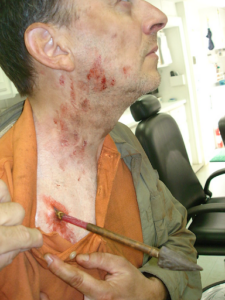
Creating a Custom Wound:
If you’re sculpting the wound yourself, begin by preparing your material – usually gelatin or silicone. Warm the gelatin until it becomes pliable, or mix your silicone according to its instructions. Then, apply a small amount directly to the marked area on the skin.
Shape the material to form a slightly raised ring with a narrow opening in the center. This gives the illusion that the skin has stretched and lifted from the force of penetration. Keep the edges thin and smooth so they blend into the real skin seamlessly once colored. The opening should resemble a compact, irregular puncture rather than a perfect round hole.
The clearer your sculpted form is at this stage, the more realistic the final wound will appear on camera.
Check out: How to Create Realistic Wounds and Scars with Prosthetics?
Applying a Pre-Made Prosthetic:
If you’re working with a professional prosthetic, the process is simpler but still requires precision. Apply a thin layer of Pros-Aide to the skin and the back of the prosthetic. Allow both to become tacky before positioning the piece. Press it down gently, ensuring the alignment matches the marked penetration angle.
Blend the prosthetic edges with additional Pros-Aide, silicone, or a blending medium so the seam disappears into the actor’s skin. Clean transitions are crucial – any harsh line will show under film lighting.
4. Building Depth With Paint
A convincing arrow wound depends heavily on how you paint it. Professional special effects makeup often uses alcohol-activated palettes because they create realistic transparency.
Build the colors gradually:
- Start with neutral reds and purples for irritation.
- Add dark maroons and browns to create depth.
- Use minimal blacks only inside the deepest areas.
- Feather outward with yellows and greenish tones for shock bruising.
Tip: The goal is to simulate depth rather than “red circle with blood.” Subtle color transitions make the wound believable on camera.
5. Adding the Arrow Shaft (Optional)
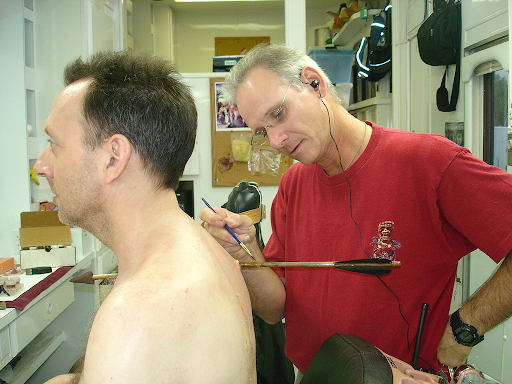
If the scene calls for the arrow to remain lodged in the body, the prop shaft must be added carefully so it integrates naturally with the wound. Professional SFX artists often use safe, production-ready versions such as hollow shafts, silicone-tipped pieces, breakaway arrows, or magnetic designs that reduce risk during movement.
The most important detail is maintaining correct alignment; the shaft should follow the same angle as the prosthetic so it appears truly embedded rather than floating above the skin. Once positioned, it can be secured using skin-safe adhesive or, for heavier props, a small hidden harness to ensure stability throughout filming.
Enroll now or book a tour to start your journey on becoming a special effects makeup expert with Cinema Makeup School in Los Angeles, CA!