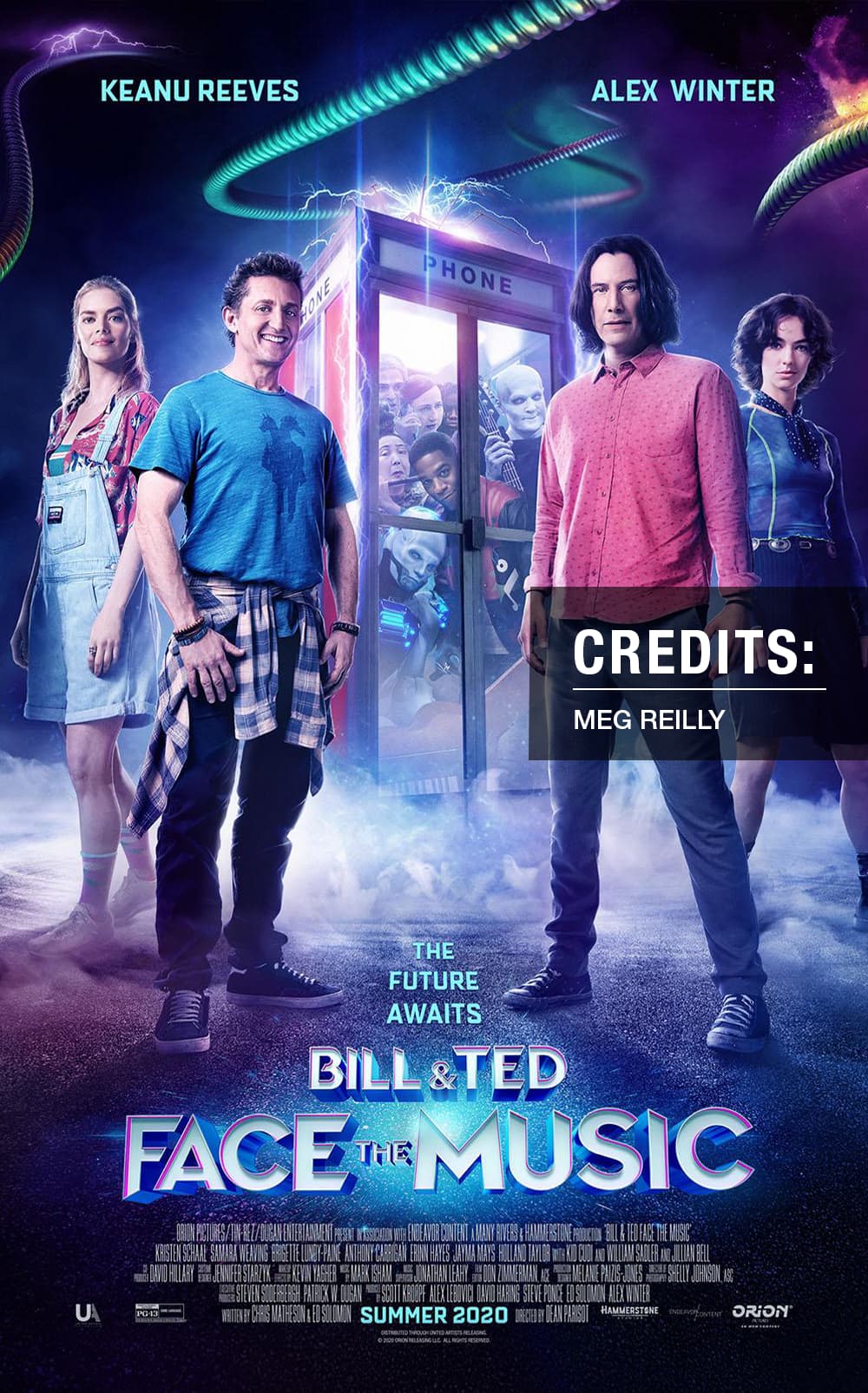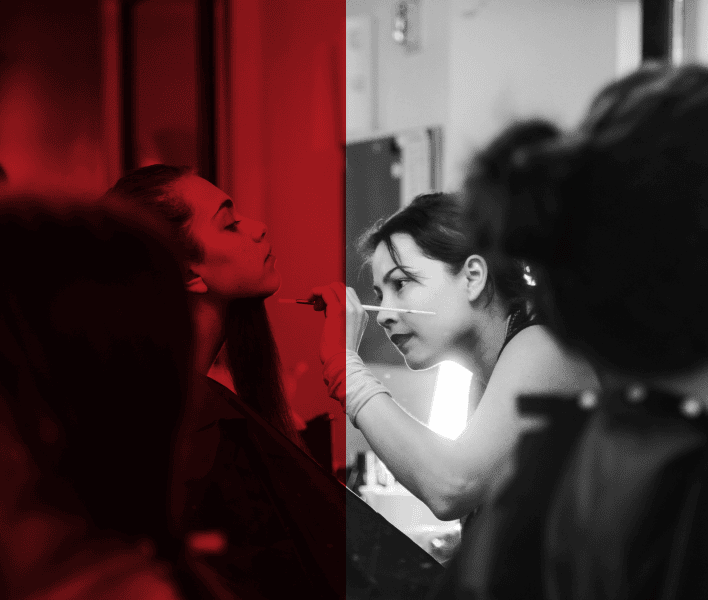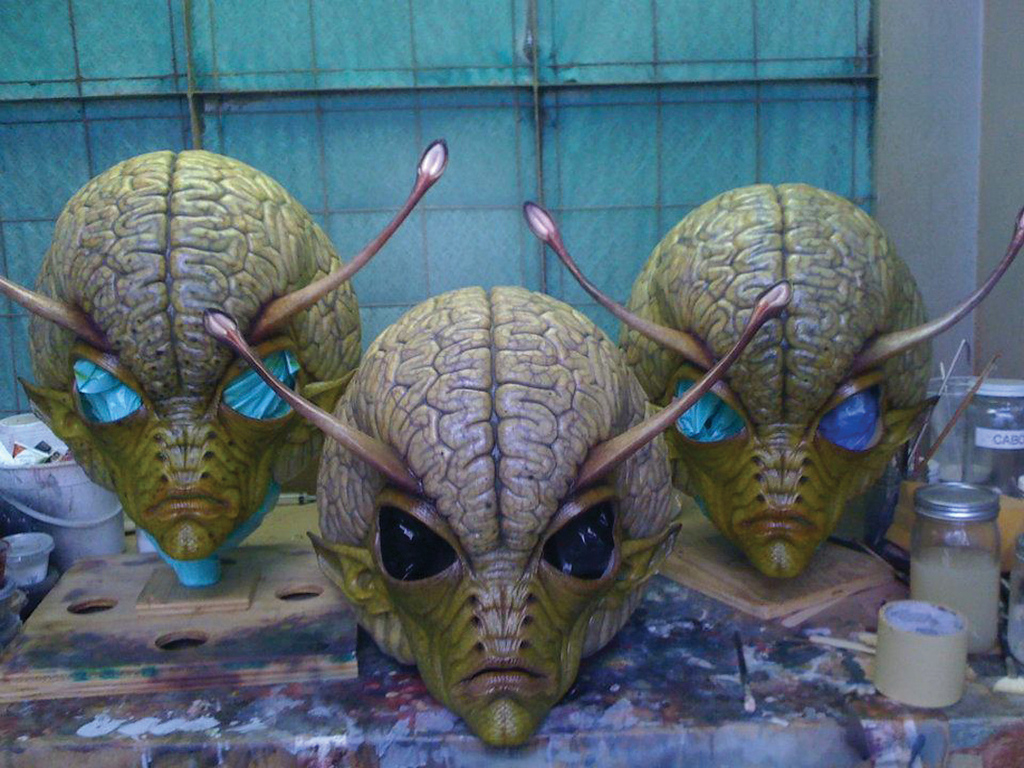
What looks like a seamless alien transformation on screen is actually a carefully designed prosthetic built over multiple production stages. From initial design to final application, every step is controlled, tested and refined to meet the demands of cameras and performance-driven scenes.
An alien creature mask isn’t just about appearance; it must move naturally with the actor, hold up under studio lighting and remain consistent across long shooting schedules.
This guide breaks down how artists create alien creature masks using special effects makeup, covering the full process, tools and materials used in the industry, from concept development to on-set application.
Alien Creature Mask Styles Used in Film and Television
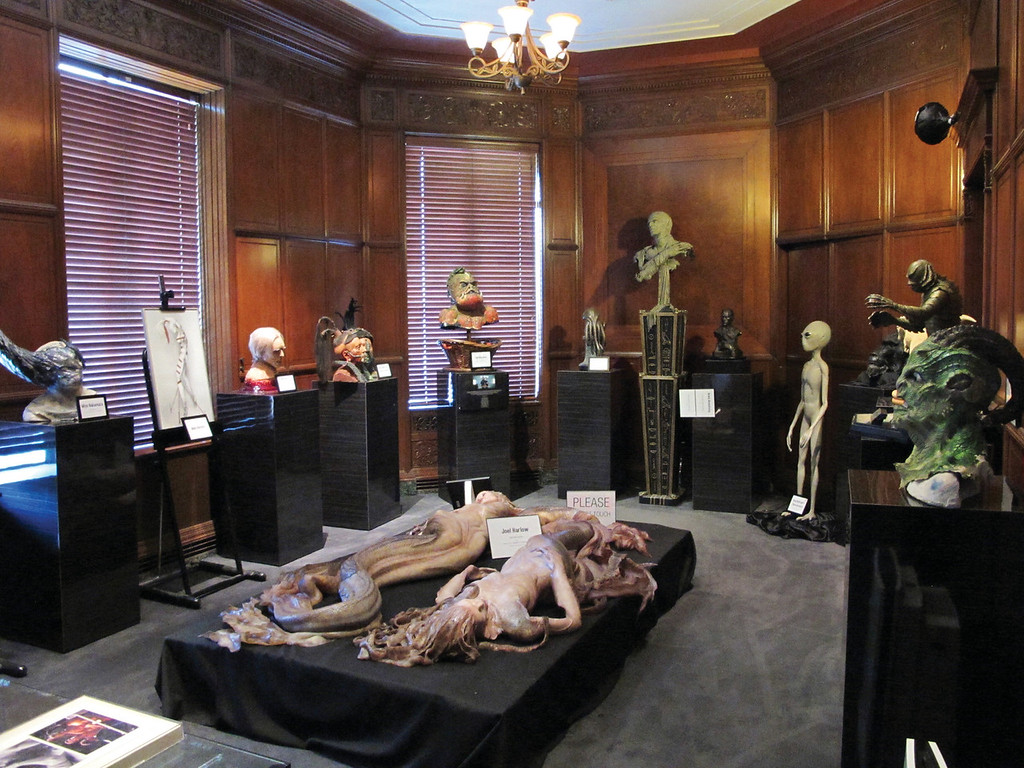
Alien creature mask styles in film and television typically include humanoid designs, monster-inspired forms, predator-inspired structures and hybrid creations. Each of these approaches serves a different purpose, ranging from characters that need human-like expression to those built for intimidation, dominance, or transformation, depending on how the alien is meant to function within the story.
1. Humanoid Alien Creature Masks
Humanoid alien masks are designed to closely resemble human facial structure while introducing subtle non-human elements. These may include modified bone structure, unusual skin texture, altered eye shapes, or slight asymmetry in facial features. This style is commonly used when the alien character needs to speak, express emotion, or interact closely with human actors.
2. Monster-Inspired Alien Creature Masks
Monster-inspired alien masks are designed to create a more intense, threatening, or unsettling visual presence. These designs often feature exaggerated anatomy, deep surface textures, distorted proportions and sharper structural elements. They are used in darker science fiction or horror-driven storytelling where the alien is meant to feel dangerous or unfamiliar.
3. Predator-Inspired Alien Creature Masks
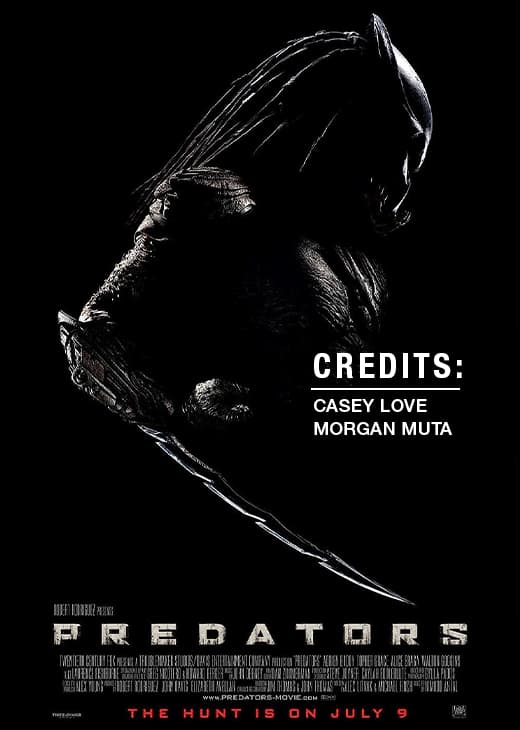
Predator-inspired alien masks focus on structured, symmetrical and highly defined visual design. These creations often communicate intelligence, strength and control through sharp facial forms, clean structure and surface detailing that feels protective or armor-like in nature.
They are typically used for dominant or advanced alien species within a story. The design supports a sense of authority and presence on screen while maintaining a fully non-human identity.
4. Hybrid Alien Creature Masks
Hybrid alien masks combine human-like features with more extreme or abstract alien design elements. These characters often represent transformation, genetic experimentation, or evolutionary complexity within the story.
This style allows for greater creative freedom in sculpting and detailing, blending realism with imagination. Hybrid designs are especially useful when a character transitions between human and alien states or exists between two biological identities.
Check Out: What Are Prosthetic Masks in Special Effects Makeup?
Step-by-Step Process to Create an Alien Creature Mask
Creating an alien creature mask follows a structured production workflow that moves from lifecasting and sculpting to molding, casting, painting and final on-set application. Each stage builds on the previous one to ensure accurate fit, realistic surface detail and seamless integration with the actor under camera conditions.
1. Start with Lifecasting the Actor
The process begins by creating a lifecast of the actor’s face. This step ensures the alien creature mask is built on a replica of the performer, which is critical for fit, movement and on-set performance.
What is used:
- Alginate (skin-safe molding material)
- Plaster bandages
- Petroleum jelly (release agent)
- Water and mixing bowls
Alginate is applied over the actor’s face to capture all facial details, including pores and subtle contours. Once it sets, plaster bandages are applied on top to form a rigid outer shell. After curing, both layers are removed carefully, creating a negative mold of the actor’s face. This becomes the foundation for sculpting the alien design.
Also read How to Make a Face Cast That Fits Perfectly for Prosthetic Makeup?
2. Move into Sculpting the Alien Creature
Once the lifecast is prepared, the alien design is sculpted directly onto it. This is where the transformation from human anatomy to creature design happens.
Clay is built up over the lifecast to reshape the facial structure. Major forms like brow ridges, jawline changes, cheek extensions and cranial modifications are established first. After the primary structure is locked, finer sculpting tools are used to add skin texture, pores, folds and surface variation.
This stage defines the final identity of the alien creature mask and determines how it will read on camera.
3. Mold Making the Finished Sculpt
After sculpting is complete, the design is locked into a mold so it can be reproduced in flexible materials.
The sculpt is divided into sections if required to ensure clean removal. A mold material is applied over the surface in controlled layers to capture every detail. Once the mold is fully set, a strong outer shell is added for stability. After curing, the mold is carefully separated and cleaned for casting.
Why Does Your Sculpture Look Great in Clay but Fail in the Mold?
Learn Why Your Sculpt Looks Great in Clay but Fails in Mold?
4. Casting the Final Mask
The mold is now used to create the wearable alien creature mask.
Silicone or foam latex is poured or brushed into the mold, depending on the production requirement. Silicone is used for high-detail, close-up work due to its realistic skin movement, while foam latex is preferred for lightweight wear and longer shooting days.
Once cured, remove the material from the mold.
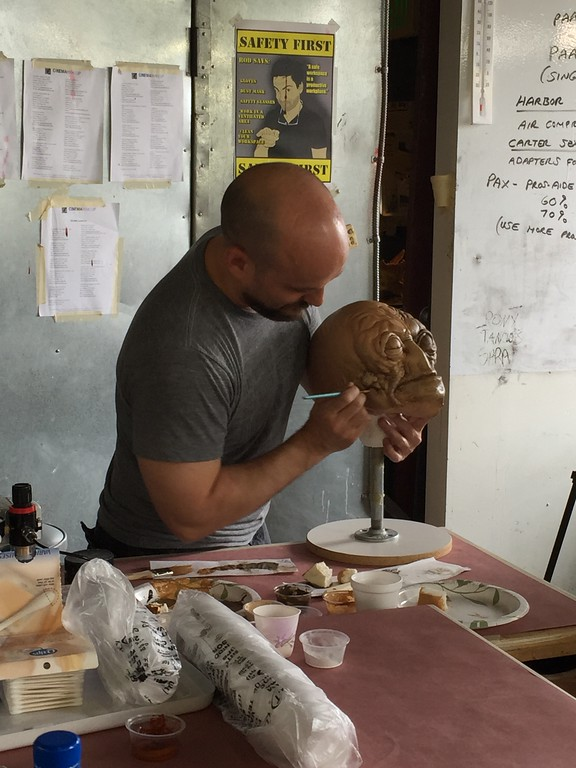
5. Painting and Surface Finishing
Move into painting the raw cast to establish realism, depth and camera-ready detail.
Airbrush the base tones first to lock in the primary skin color. From there, build additional layers gradually to introduce variation in tone, depth and surface complexity. Work sponges across the surface to disrupt uniformity so the finish doesn’t appear flat or artificial under lighting.
Choose the final seal based on the intended visual result. Keep it matte for grounded skin realism or shift toward a slight gloss if the alien design requires a more organic, wet, or enhanced surface response on camera.
6. On-Set Application and Blending
Bring the prosthetic onto the actor and proceed with the final application for shooting.
- Apply skin-safe adhesive evenly across both the actor’s skin and the inner edges of the prosthetic.
- Position the mask with precision and settle it into place using controlled pressure.
- Once fixed, blend the edges with solvents until the transition between the skin and the prosthetic disappears completely.
- Finish with corrective makeup passes to unify tone, remove visible seams and ensure the alien creature mask holds consistently under production lighting.
Tools and Materials Guide for Creating Alien Creature Mask
| Category | Tools & Materials |
| Sculpting Tools and Materials | Oil-based clay, loop tools, spatulas, detailing tools, armature or lifecast base |
| Lifecasting Materials | Skin-safe molding material, plaster bandages and release agents |
| Mold Making Supplies | Plaster or fiberglass materials, silicone for detail molds, registration keys |
| Casting Materials | Silicone, foam latex, mixing tools, pigments |
| Painting Tools | Airbrush system, alcohol-activated paints, brushes, sponges |
| Application Tools | Skin-safe adhesive (Pros-Aide or similar), blending solvents, brushes, sponges and cleanup tools |
Want to Build Professional SFX Makeup Skills?
Creating alien creature masks requires strong technical skills in sculpting, molding, casting and painting. These are essential to build and execute any prosthetic design.
However, technical skills alone are not enough. Professional special effects makeup training makes a significant difference by showing how these techniques are applied in real production workflows, how materials behave under studio lighting and how to maintain consistency across shoots.
At Cinema Makeup School, artists are trained through structured SFX programs that cover everything from facial anatomy to complete creature transformation. The focus is on hands-on learning, where each stage is taught with real production standards in mind.
Enrolling in our courses gives you:
- Exposure to real workflow timing, coordination and on-set expectations
- The ability to approach creature design with both creative and practical decision-making
- Experience in maintaining continuity and consistency across multiple shoot days
- Insight into professional standards expected in studio and production settings
- A structured learning path that prepares you for real-world SFX roles
Book a tour of our campus to get a closer look at our SFX training environment and workflow.