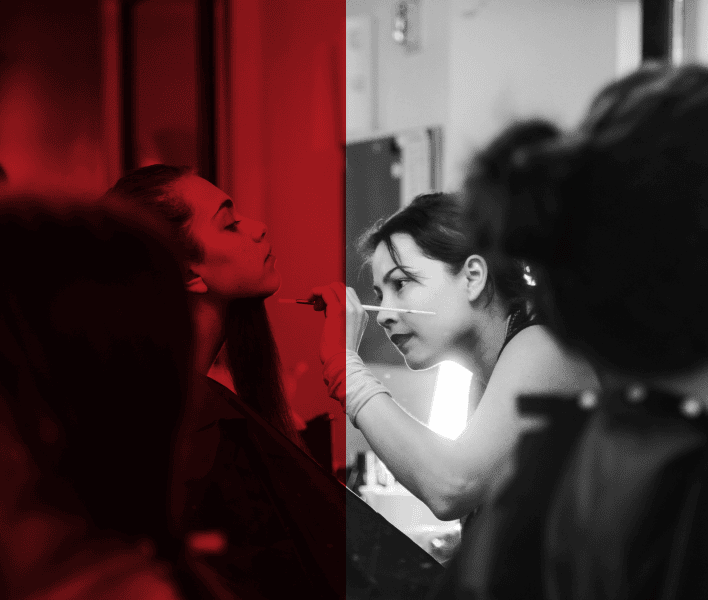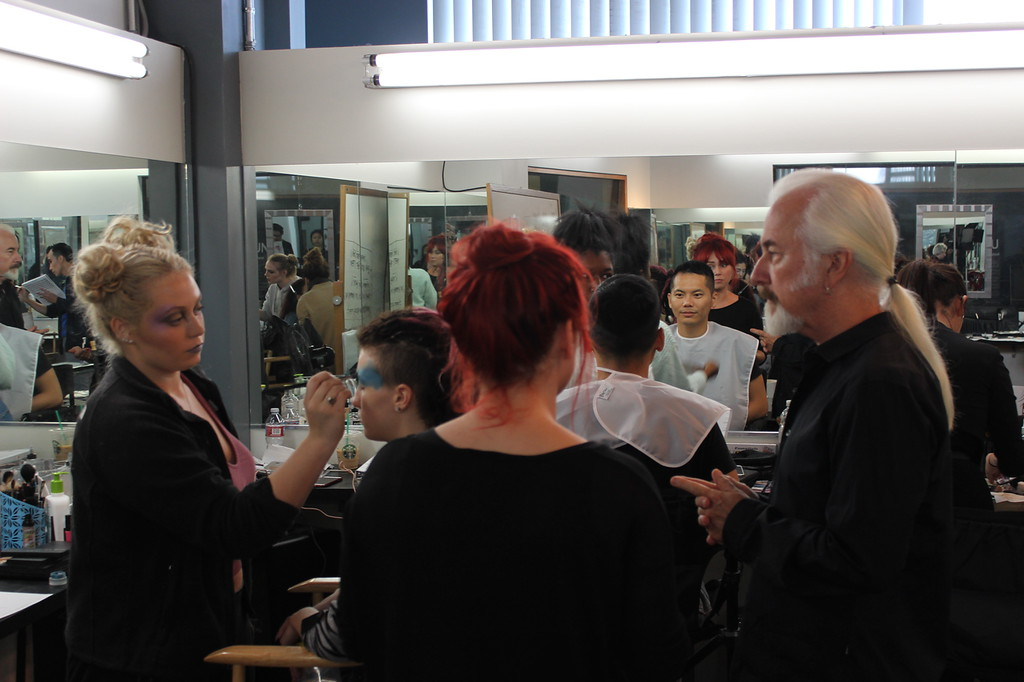
Working as a special effects makeup artist on set is one of the most demanding jobs in film and television production. Unlike beauty or corrective makeup, SFX makeup involves prosthetics, wounds, aging effects, creatures, blood effects and heavy materials that must survive long shooting hours. Every detail must look realistic, stay consistent and hold up under close camera inspection.
On-set SFX makeup artists work in fast-moving environments where time, weather, actor comfort and technical limits all create daily challenges. In this blog, we’ll explore the most common on-set SFX makeup challenges and how professional artists handle them in real production settings.
How SFX Makeup Artists Handle On-Set Challenges?
On-set SFX makeup is demanding, as artists must create realistic prosthetics, wounds, aging effects and creature designs while working under tight schedules, changing environments and high-definition cameras. Below are the most common challenges and show how professional artists manage them efficiently.
1. Time Pressure With Complex SFX Applications
During filming, advanced special effects makeup work must be completed quickly, even when the process involves many steps.
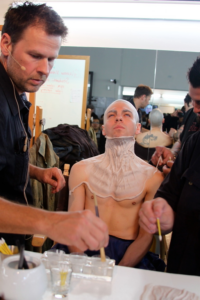
Complex SFX applications often include:
- Prosthetic pieces such as scars, wounds, facial appliances, or full-face prosthetics that require careful placement and blending.
- Layered makeup effects, where multiple materials like latex, silicone, paints and sealers are used together.
- Aging makeup that needs detailed shading, texture and consistency across different scenes.
- Creature or character transformations that involve heavy makeup, appliances and body painting.
To handle time pressure, SFX makeup artists rely heavily on preparation. Prosthetic pieces are sculpted, molded and pre-painted before the shoot day. Artists organize their kits in advance and follow a clear application order to avoid delays. Test fittings and rehearsed techniques help reduce application time on set.
2. Prosthetic Adhesion and Edge Breakdown
Heat, sweat, facial movement and long hours can cause edges to lift or textures to break down. This can ruin realism and interrupt shooting.
Actors may need to talk, shout, cry, or perform action scenes, all of which put stress on prosthetic appliances. If adhesion fails, the makeup artist must fix it quickly without restarting the entire application.
SFX makeup artists solve this by choosing the correct adhesives for each situation. Skin type, weather conditions and appliance material all affect adhesive choice.
Artists keep repair kits ready on set, including adhesive, remover, alcohol palettes and blending tools. Small fixes are handled between takes to maintain continuity without slowing down production.
3. Managing Blood Effects
Blood effects are a major part of SFX makeup, but they come with challenges. Blood can dry, smear, stain costumes, or change color under lights. In action scenes, blood may need to reset quickly between takes.
Another challenge is controlling how blood reacts during movement. Running, fighting, or falling can distort carefully designed effects.
SFX artists solve this by understanding different types of fake blood and how they behave. Some blood formulas are designed to stay wet, while others dry matte. Artists choose the right type based on the scene’s needs.
They also coordinate closely with the costume department to protect wardrobe and plan resets efficiently. Fast cleanup and accurate reapplication help keep filming on schedule.
Learn What Do SFX Makeup Artists Use for Fake Blood?
4. Actor Comfort and Skin Safety
SFX makeup can be heavy, restrictive, or uncomfortable for actors, especially during long shoots. Prosthetics may limit movement, affect breathing, or cause skin irritation if not applied correctly.
If an actor is uncomfortable, performance can suffer and production may be disrupted.
Professional SFX artists always prioritize skin safety and comfort. They test materials beforehand, use skin-safe products and monitor the actor throughout the day. Breaks are planned when possible and removal is done carefully to avoid damage.
Clear communication with the actor helps build trust. When actors feel safe and informed, they cooperate better during long applications and complex scenes.
Check out: Importance of Hygiene and Safety in SFX Makeup Careers
5. Dealing With Weather and Environmental Conditions
Outdoor shoots create extra difficulties for SFX makeup. Heat can soften prosthetics, cold can make materials stiff and moisture can weaken adhesives. Wind, dust and rain all affect the durability of special effects makeup.
Artists prepare for these conditions by adjusting materials and techniques. In hot environments, they use stronger adhesives and sealants. In cold weather, they allow materials to warm properly before application.
Makeup designs may also be simplified to suit the environment. Realistic results are still possible, but they must be practical enough to survive real-world conditions.
6. Managing Makeup Look Under Film Lighting and Cameras
SFX makeup must look believable under high-definition cameras and strong lighting. Textures that look realistic in person may appear unnatural on screen. Shine, color shifts, or visible edges can break the illusion.
Special effects makeup artists solve this by testing makeup under production lighting whenever possible. They adjust paint layers, add texture, or reduce shine to match camera needs.
Working closely with the cinematography team helps identify potential issues early. When makeup, lighting and camera work together, SFX effects appear more realistic on screen.

7. Last-Minute Creative Changes in SFX Makeup
Directors may request changes in the makeup at the last minute. A wound may need to look more severe, a creature may need extra detail, or a character’s aging may need adjustment.
These changes can be stressful, especially when time and materials are limited.
Experienced SFX artists stay flexible and solution-focused. They understand which changes are realistic within the available time and communicate clearly with the production team. Having extra materials and adaptable designs helps artists respond quickly without compromising quality.
Take Professional Training for On-Set SFX Makeup Success
Managing special effects makeup on set requires more than creativity alone. Speed, precision, problem-solving and adaptability are essential skills for any SFX artist. At Cinema Makeup School, we offer comprehensive special effects makeup courses covering prosthetics, creature design, airbrushing and even Digital FX makeup using software like ZBrush.
Our students learn directly from professional artists who guide them every step of the way. You’ll gain hands-on experience applying prosthetics, creating creatures, mastering blood and injury effects and learning how to work efficiently under real on-set conditions.
Beyond technical skills, you’ll develop professionalism and confidence. When you use proper techniques and smart skills, the work becomes much easier.
To see what our students create and how they learn, check out our YouTube channel, where we showcase their SFX transformations.
More Helpful Blogs –
How Mannequins Help Beginners Create SFX Makeup Characters?
How to Build a Portfolio That Gets You Hired as an SFX Makeup Artist?
How to Make SFX Makeup Last Longer on Skin?
What Should Be in Your Kit for Managing On-Set Changes?
- Adhesives and Removers: Multiple types suitable for different skin types and prosthetic materials.
- Extra Prosthetics and Appliances: Backup pieces for quick replacements or adjustments.
- Pre-Mixed Paints and Makeup Products: Ready-to-use colors for touch-ups or last-minute changes.
- Tools for Application and Blending: Brushes, sponges, blending tools and alcohol palettes.
- Sealants, Setting Sprays and Powders: Ensure makeup stays durable under lights, heat, or long hours.
- Blood and Injury Materials: Different types of fake blood, gels and creams for realistic effects.
- Tape and Medical-Grade Glue: For reinforcing edges or securing prosthetics in action scenes.
- Organized Storage: Labeled compartments, small containers, or trays for quick access.
If you feel ready to take your skills to the next level, take a tour of our campus and gain the knowledge and experience needed to succeed in SFX makeup.