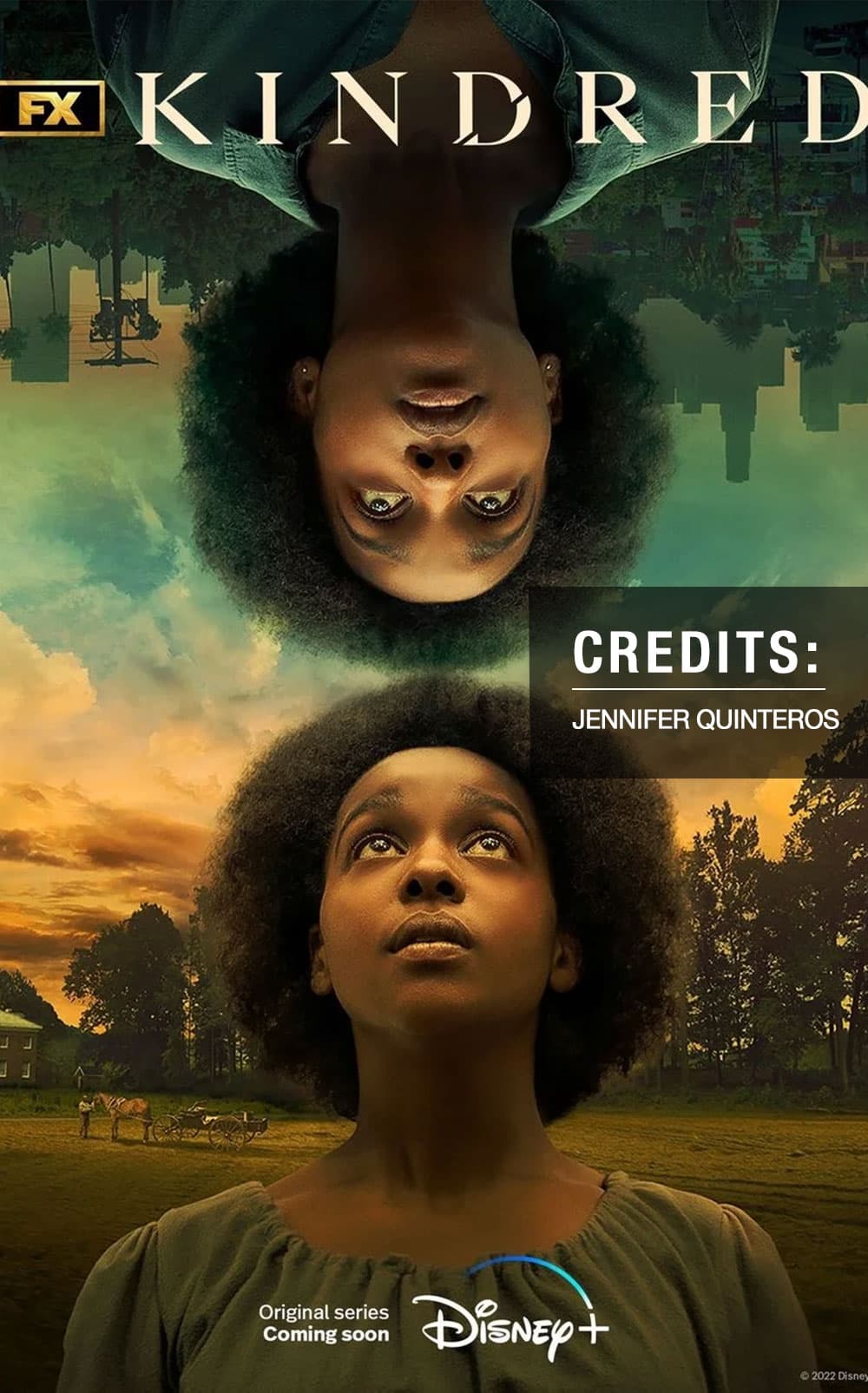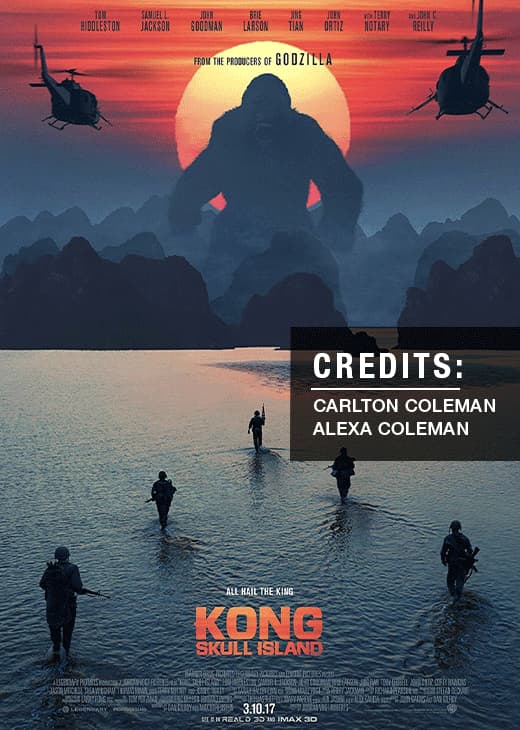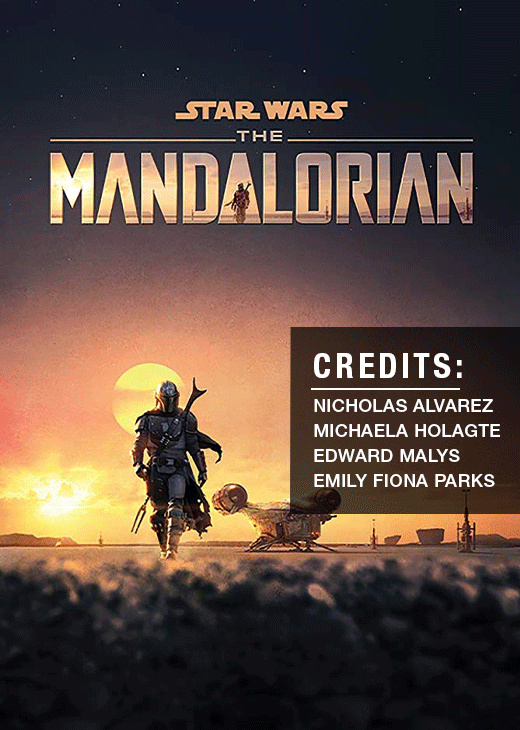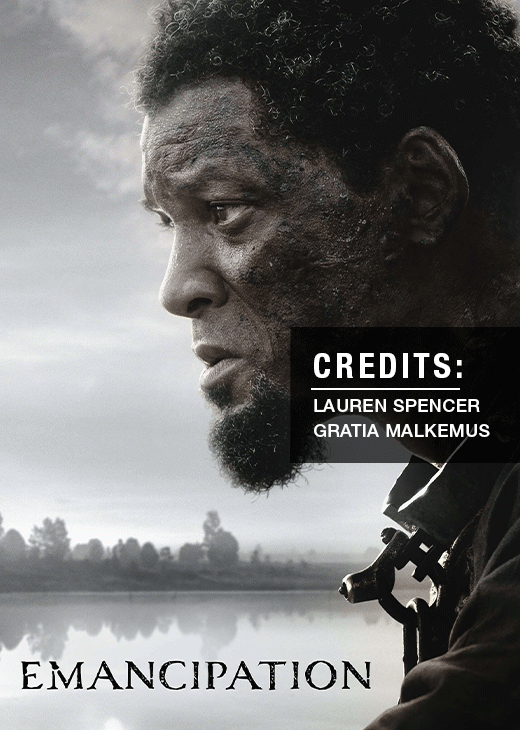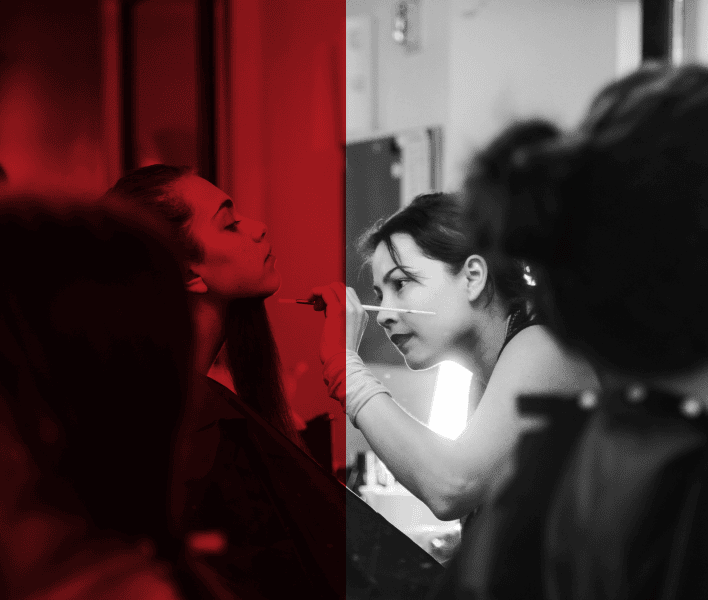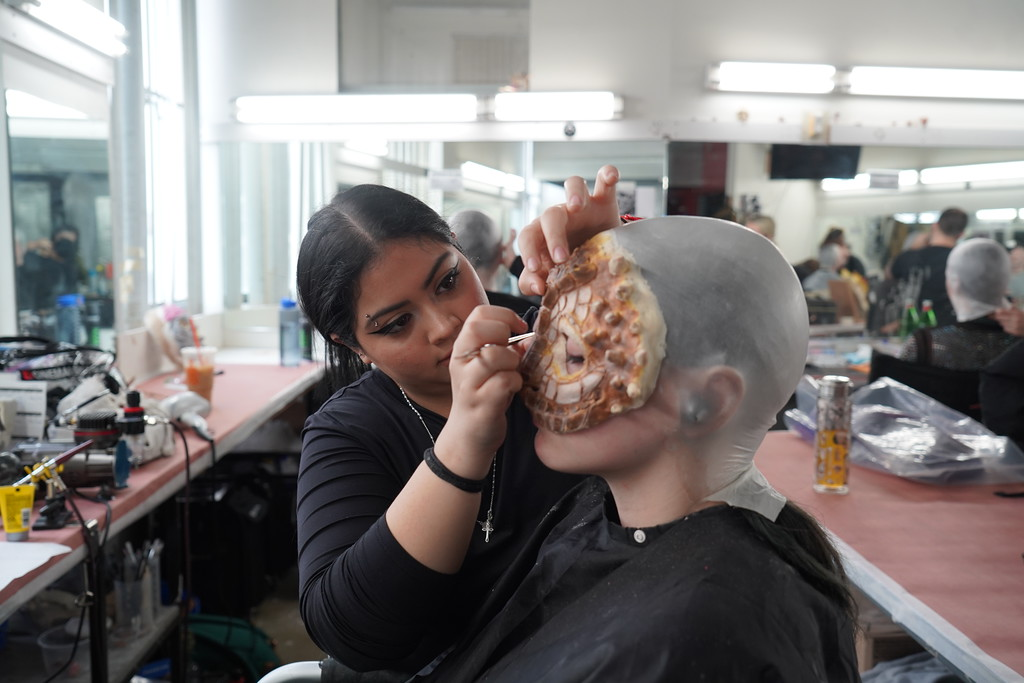
When you watch a movie, you might think the performance alone defines how you connect with a character. But there’s another layer of storytelling that shapes your emotions before a single line is spoken, i.e., movie makeup.
From subtle contouring that reveals vulnerability to elaborate prosthetics that create creatures of nightmares, special effects makeup artists have the power to change the audience’s perception. Makeup is not just decoration; it’s psychology, storytelling and art combined.
How Movie Makeup Shapes the Way the Audience Sees Characters?
In film, what the audience feels about a character often begins before the first line of dialogue – it starts the moment they appear on screen. That’s the silent power of special effects makeup. Whether it’s subtle contouring that adds realism to a period drama or the jaw-dropping prosthetics in a sci-fi epic, makeup dictates how we perceive a character’s personality, morality and even emotional depth.
1. Realism Makes Characters Believable
The most impactful makeup is the one the audience never questions. Whether it’s dirt, sweat, or a subtle bruise, these details anchor a performance in realism. When an actor’s appearance feels authentic and consistent with their surroundings, audiences stay immersed in the story.
Movie Makeup Artists study how skin reacts to light, age and emotion so every element looks authentic on camera. In high-definition filmmaking, realism isn’t optional – it’s storytelling precision.
2. Makeup Communicates Personality Instantly
Audiences form opinions within seconds of seeing a face, often before a character speaks a single word. That first visual impression is powerful and movie makeup plays a major role in shaping it. A clean, polished look might suggest confidence, innocence, or authority, while uneven tones, scars, or subtle imperfections can hint at chaos, struggle, or hidden depth.

Every choice – color of the eyeshadow, contour of the cheek, texture of the skin – contributes to how viewers perceive personality traits.
3. Transformation Builds Emotional Connection
One of the most powerful parts of movie makeup is how it helps audiences connect emotionally with a character. When an actor completely changes their appearance, it’s easier for viewers to believe in the person they’re portraying – not just the performance.
Special Effects Makeup Artists bring that transformation to life. It turns a familiar face into someone entirely new, giving depth and credibility to the role.
4. Symbolism Through Makeup Design
Makeup can represent inner states or thematic ideas, not just appearance. For instance, pale tones might reflect fragility or illness, while bold color contrasts could symbolize moral conflict or transformation.
In movie character makeup, artists often use design elements like metallic sheens or scars as metaphors for power, pain, or evolution. These creative choices evoke an emotional response before the audience can understand it logically.
5. Showing Character Growth Through Movie Makeup
Movie character makeup plays a significant role in portraying how a character evolves throughout a movie. It’s not just about how they look – it’s about what they’ve been through. As the story moves forward, movie makeup artists adjust the character’s appearance to reflect their journey.
For example, a confident, polished character at the start of a film might look tired or bruised by the end, showing the challenges they’ve faced. Or a shy character might gradually gain stronger, sharper makeup looks as they grow bolder. These visual changes help the audience feel that transformation without anyone having to explain it. It’s a simple but powerful way to keep viewers emotionally connected to the story.
6. Collaboration Between Makeup and Direction
The best movie makeup outcomes happen when artists work closely with directors, costume designers and cinematographers. Every decision, from foundation shade to eye shadow color, must serve the director’s visual language.
A noir film might demand desaturated tones; a fantasy epic might need hyper-stylized contrast. When makeup design aligns with tone and story direction, audience perception becomes guided, not guessed.
Why Understanding Audience Perception Matters for Movie Makeup Artists?
Audience perception is vital because it ultimately decides whether a character’s performance succeeds or fails. No matter how skilled an actor is, if the makeup doesn’t support the character’s story, the audience may not believe or connect with them. Movie Makeup Artists play a key role in shaping that perception.
Every detail – from subtle shadows and highlights to prosthetics and textures – influences how viewers interpret a character. A hero might feel courageous or relatable because their makeup reflects determination and realism, while a villain can feel threatening or untrustworthy through scars, color choices, or asymmetry.

Understanding audience perception allows makeup artists to design looks that reinforce personality, emotion and story arc. It ensures that every visual choice – no matter how small – supports the performance rather than distracting from it. In short, audience perception is the benchmark for success: if viewers are convinced and emotionally engaged, the character has truly come to life on screen.
Learn and Grow Your SFX Makeup Skills at Cinema Makeup School
Since not all movie makeup artists have the same skill sets, professional training can make all the difference. MUAs trust Cinema Makeup School, where students can explore their unique interests and develop a wide range of skills.
Our courses give hands-on experience with prosthetics, realistic character transformations and the techniques professionals use to influence audience perception. By training with experienced instructors, you can build the skills that make you a confident, versatile and industry-ready movie makeup artist.
Movie Character Makeup Ideas That Evoke Emotion
| Emotion | Makeup Approach |
| Fear | Pale tones, uneven textures, dark under-eyes |
| Power | Sharp lines, bold contours, metallic details |
| Sadness | Cool tones, minimal gloss, faded lips |
| Mystery | Shadow play, asymmetry, texture blending |
| Transformation | Layered prosthetics, progressive designs |
If you are ready to take the next step in your career, book a tour of our special effects makeup school located in Los Angeles.