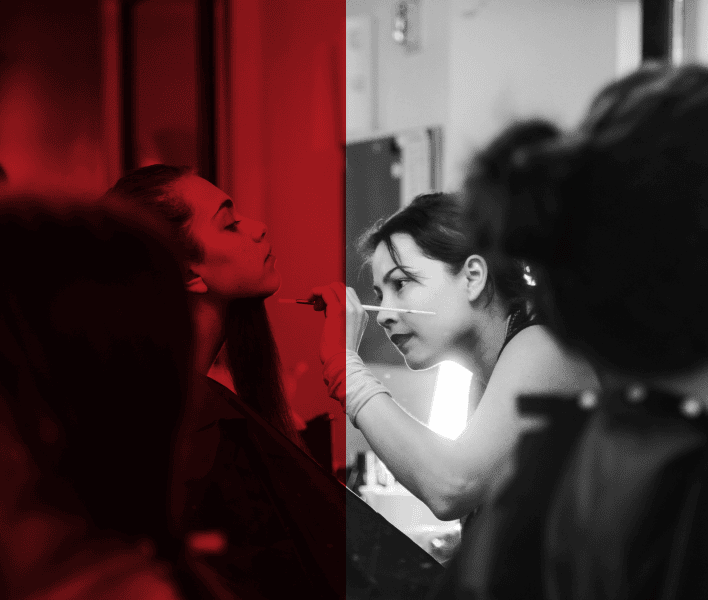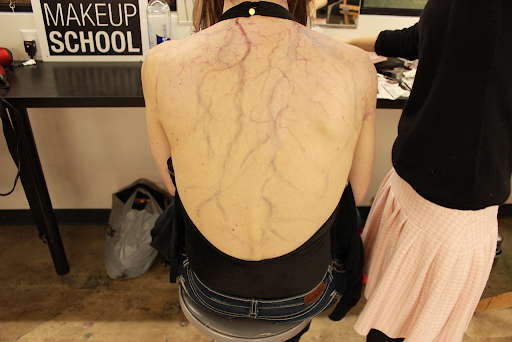
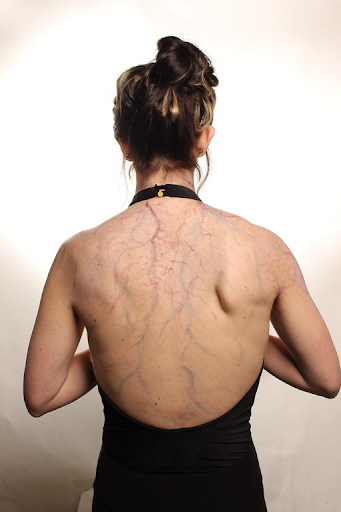
Creating realistic veins is one of the finer details in special effects makeup, but making them look natural is not simple. SFX artists use a combination of painting, color layering, blending, stippling, airbrushing and other techniques to create the subtle depth and variation of real veins.
Mastering these details requires an understanding of how color, transparency, texture and skin tones work together. The right technique can also vary depending on whether the veins are being created directly on the skin, on a prosthetic, or as part of a creature or character design.
In this guide, we’ll explore the techniques to create fake veins, where each technique works best and how aspiring artists can practice these details to achieve more realistic results.
SFX Techniques to Make Fake Veins
SFX artists use different techniques to create fake veins depending on the character, makeup design and level of realism required. Some techniques create subtle veins that blend into the skin, while others are better suited for exaggerated creature and horror effects.
| Technique | Where It Is Used |
| Hand Painting | Realistic human characters, aging makeup, subtle vascular details and veins painted directly onto skin or prosthetics |
| Airbrushing | Large areas such as the face, arms, chest and legs, especially when soft and gradual vein effects are needed |
| Stencils | Creature, fantasy and large-scale character makeup where artists need to establish repeated or complex vein patterns before refining them by hand |
| Prosthetics | Monsters, creatures, supernatural characters and designs requiring raised or deeply integrated veins beneath a translucent prosthetic |
Looking for the Best Special Effects Makeup School to Learn These Techniques?
Located in Los Angeles, CA, Cinema Makeup School is recognized as one of the best SFX makeup schools. We have earned this position by providing high-quality special effects makeup education to aspiring artists. This commitment is reflected in the credits of our alumni, who have worked on productions including Thor, Predators, Kong, Jessica Jones and more.
Enrolling in our SFX makeup programs can benefit you in the following ways:
- Learning from experienced instructors
- Working on real projects
- Gaining hands-on training
- Learning safety standards and professional etiquette alongside SFX makeup techniques
If you are considering joining us, take a tour of our campus to see where aspiring artists develop their SFX makeup skills.
Step-by-Step Process to Create SFX Makeup Veins
The process for creating fake veins changes depending on the technique being used. Below are four common approaches SFX artists can practice to create vein effects for different characters.
Fake Veins with Hand Painting
- Prepare the skin: Clean and prepare the surface before applying makeup.
- Choose the vein colors: Select subtle blue, purple, red, or blue-green tones that work with the character’s skin tone.
- Map the vein pattern: Lightly sketch the main vein paths, keeping the pattern irregular and naturally branched.
- Paint the veins: Use a fine brush to apply thin, broken strokes rather than solid lines.
- Soften the color: Blend the edges and reduce the intensity so the veins appear beneath the skin.
- Add smaller lines: Extend thinner veins from the main lines to create a more natural pattern.
- Check the final effect: Make sure the veins are visible without becoming the dominant feature of the makeup.
Fake Veins with Airbrushing
- Prepare the surface: Apply the character’s base skin color and allow it to settle.
- Select the airbrush color: Choose a diluted color that complements the surrounding skin.
- Plan the vein placement: Use a reference pattern to determine where the veins should appear.
- Airbrush lightly: Build the vein color gradually using controlled, fine passes.
- Vary the intensity: Make some sections stronger and allow others to fade naturally.
- Blend the effect: Add a light layer of surrounding skin color if the veins appear too sharp or strong.
Fake Veins with Stencils
- Prepare the stencil: Choose or create a vein stencil appropriate for the character design.
- Position the stencil: Place it carefully over the skin or prosthetic and secure it without flattening the intended pattern.
- Apply the color: Use an airbrush, sponge, or suitable brush to apply a thin layer of vein color through the openings.
- Remove the stencil: Lift it carefully to avoid smudging the pattern.
- Break up the pattern: Add or remove sections by hand so the veins do not look repetitive.
- Refine the details: Use a fine brush or airbrush to add smaller lines and soften selected areas.
- Blend the effect: Lightly soften the edges of the veins with a sponge or brush to make the pattern look natural.
Check Out: Step-by-Step Guide to Airbrushing with Stencils
Fake Veins with Prosthetics
- Plan the vein placement: Determine where the veins should appear on the prosthetic based on the character and design.
- Create the vein pattern: Apply or incorporate the appropriate vein coloration into the prosthetic according to the material and fabrication method.
- Add the translucent layer: Incorporate the vein effect beneath or within the prosthetic material so it can remain visible through the surface.
- Apply the prosthetic: Attach the finished appliance and blend its edges into the surrounding skin.
- Refine the surface: Add subtle color and vein details after application where necessary.
- Check the final effect: Make sure the veins remain visible and believable under the intended lighting.
Related Articles:
Fake Eye Prosthetics in SFX Makeup: Types, Materials and Uses
What to Look for in a Professional SFX Makeup Certificate Program
How to Sculpt a Realistic Long Nose Prosthetic
FAQs
Q 1. How long do fake veins last on the skin?
Painted veins can last for several hours when properly set, while prosthetic veins can remain in place for the duration of the prosthetic application.
Q 2. Can fake veins be removed easily?
Yes. Painted veins can usually be removed with an appropriate makeup remover, while prosthetic veins are removed with the adhesive remover suitable for the appliance.
Q 3: Should I learn SFX vein techniques on my own?
You can practice basic vein painting on your own, but joining a professional special effects makeup course can help you learn advanced techniques, proper material handling and how to create more realistic results.
Q 4. Do fake veins look different under film lighting?
Yes. Lighting can change how visible the colors and details appear, so artists should test the finished effect under the intended lighting.
Book an in-person or virtual tour of Cinema Makeup School campus and discover the facilities, classrooms and hands-on learning environment.