
Working with materials like latex, silicone and prosthetics is a major part of professional special effects makeup. These materials allow artists to transform faces, build realistic textures and design characters that go beyond imagination. However, as creative as the process may be, it also involves chemicals, adhesives and skin contact, so safety is essential.
Whether you’re a student, a beginner experimenting with effects, or a professional makeup artist, understanding safe handling practices protects not just your model or actor but also your own health. This guide breaks down everything you need to know about working safely with latex, silicone and prosthetics in SFX makeup.
Ways to Safely Work with Latex, Silicone and Prosthetics
Working with materials like latex, silicone and prosthetics requires both creativity and caution. These substances can bring characters to life, but they can also cause serious issues if used incorrectly – rashes, poor adhesion, or even ruined prosthetics. Whether you’re crafting wounds, aging effects, or creature designs, understanding how to handle these materials safely is essential for every SFX makeup artist. Below are the best practices to keep both your clients and your creations in top condition.
1. Understanding the Materials
Before you start using any material on skin, it’s important to understand what each one is made of and how it reacts.
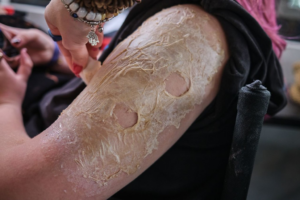
Latex: Liquid latex is one of the most common SFX materials. It’s flexible, affordable and used for creating skin textures, scars, wounds and old-age effects. However, latex is also a known allergen. Many people have mild to severe allergic reactions to it, ranging from itching and redness to more serious irritation.
Silicone: Silicone is known for its skin-like feel and flexibility. It’s often used for creating prosthetic appliances that look natural on camera. Unlike latex, silicone is hypoallergenic, but it requires special adhesives and sealers. Some of these products may contain strong chemicals or solvents, which can irritate if used incorrectly.
Also read Foam Latex vs Silicone: Choosing the Right Material for SFX Prosthetics
2. Preparing the Skin and Workspace
A clean and organized environment is essential for both professional results and safety.
- Clean the Work Area
Before starting, disinfect your workstation. Remove clutter, clean surfaces and make sure tools like brushes, spatulas and sponges are sanitized. Keep tissues, cotton swabs and wipes nearby for quick cleanup.
- Ensure Proper Ventilation
When working with liquid latex, silicone mixtures, or solvents, fumes can build up quickly. Always work in a well-ventilated room. Use a fan or an exhaust system if possible.
- Prep the Skin Properly
Proper skin preparation is essential for achieving strong adhesion and maintaining comfort throughout wear. Always begin by cleaning the skin thoroughly with a gentle cleanser to remove oils, dirt, or makeup residue. This ensures that adhesives bond correctly and the prosthetic stays in place.
Avoid applying moisturizers beforehand, as they can create a slippery surface that weakens adhesion. For long-duration applications, consider using a barrier spray or cream to form a protective layer between the skin and products, helping to minimize irritation and make removal easier later on.
- Conduct an Allergy Test
Never skip the patch test – especially when working with new materials or new models. It’s better to delay an application than to risk a reaction during the shoot.
3. Safe Techniques for Working with Latex
Liquid latex can create some of the most impressive effects in makeup, but it must be handled carefully.
Avoid applying near the eyes or mouth. Latex can pull delicate skin and cause irritation.
Protect hair and eyebrows. Coat hair with petroleum jelly or block with a bald cap before applying latex near those areas.
Apply in thin layers. Thinner coats dry faster and are easier to remove.
Let it dry completely. Applying new layers before the previous one dries can trap heat and moisture, leading to discomfort or skin irritation.
Do not use heat guns on skin. While latex can be heat-dried off skin, never use direct heat to accelerate drying on a person’s face or body.
Removal: Peel the latex gently from the edges using your fingers or a soft tool. Use warm water and mild soap to remove residue. Apply moisturizer afterward to soothe the skin.

4. Safe Techniques for Working with Silicone
Silicone provides more durability and realism but comes with its own handling considerations.
Mix components accurately. Most silicone products have two parts that need to be mixed at precise ratios. Incorrect mixing can result in incomplete curing or sticky finishes.
Wear gloves. Some uncured silicones contain chemicals that can irritate the skin.
Use proper adhesives. Use medical-grade silicone adhesives instead of general-purpose glues.
Seal edges carefully. After application, use a suitable blending agent to ensure edges don’t lift or irritate the skin.
Avoid solvents on the skin. Many silicone thinners or removers are not skin-safe. Always check product labels.
Removal: Use a remover specifically designed for silicone adhesives. Work slowly from the edges inward, never pulling aggressively. After removal, clean the skin gently with an oil-free cleanser.
5. Applying and Removing Prosthetics Safely
Prosthetic applications can range from small wounds to full-face appliances. The process requires patience and awareness of the skin’s tolerance.
Steps to Apply Prosthetics:
- Test Fit: Always place the prosthetic on the skin without glue first to make sure it aligns properly and fits comfortably before applying adhesives.
- Apply Adhesive Carefully: Use a thin, even coat of adhesive on both the prosthetic and the skin. Let it become tacky before pressing the pieces together.
- Blend Edges: Use a stipple sponge or brush to blend edges with liquid latex or prosthetic adhesive for seamless integration.
- Paint and Powder: Once attached, apply paints and powders that are safe for both the prosthetic material and skin.
Prosthetics Removal Steps:
- Use the Correct Remover: Always match the remover to the adhesive type. Using the wrong one can damage skin or the appliance.
- Work Slowly: Start at the outer edges and gently lift. Apply remover as you go to dissolve adhesive.
- Avoid Pulling: Never pull or tear the prosthetic off.
- Clean the Skin: Wash the area with a mild cleanser and apply a soothing moisturizer.
Pro Tip: If the prosthetic will be reused, clean and store it properly according to material type.
6. Hygiene and Material Handling
Hygiene in SFX makeup is more than just cleanliness – it’s a mark of professionalism and care for your clients’ safety. Always use clean brushes, sponges and tools to avoid contamination. Never double-dip into adhesives or shared products and make sure to dispose of single-use items like cotton swabs and sponges after each session.
Keep your adhesives, sealers and removers in clearly labeled containers and store all materials in cool, dry places away from direct sunlight to preserve their quality.
When it comes to personal protection, always wear gloves when handling uncured materials and consider using a mask when mixing powders, resins, or anything that may release fine particles. Protect your eyes from potential splashes when pouring or mixing chemicals. Maintaining strict hygiene and safe handling practices ensures both your clients’ safety and the longevity of your SFX materials.
7. Aftercare for the Skin and Prosthetics
Once the shoot or performance is over, proper aftercare ensures comfort and safety.
Skin Care: After removing all materials, cleanse the skin gently. Avoid alcohol-based toners, as they can dry or irritate skin post-removal. Follow with a hydrating moisturizer or aloe-based gel to restore the skin barrier.
Prosthetic Care: If the prosthetic is reusable, clean it with a mild soap solution or specialized cleaner. Let it air-dry completely before storing it in a cool, dark place. Label and store it flat to avoid deformation.
Common Mistakes to Avoid While Working With Latex & Silicone
- Skipping allergy tests – It might seem unnecessary, but skipping this step can cause unexpected skin irritation later.
- Using the wrong adhesive or remover – The wrong choice can harm both the skin and your carefully built prosthetic.
- Ignoring ventilation – Poor airflow means more exposure to fumes, which can affect your health and focus.
- Applying too much product – Overloading material adds weight and makes the prosthetic uncomfortable to wear.
- Not reading product labels – Each formula behaves differently; knowing your materials helps you avoid unpleasant surprises.
Join SFX Makeup Training Courses to Avoid These Mistakes
In special effects makeup, even the smallest mistake can cost you hours of work, or worse, damage a prosthetic or cause a skin reaction. That’s why learning the right techniques before applying them on a model or actor is important.
At Cinema Makeup School, students gain the skills and confidence to handle latex, silicone materials safely and effectively. You’ll receive hands-on training in prosthetic makeup, all within an environment that mirrors real production sets.
Our instructors are experienced professionals from film, TV and commercial projects, teaching you how to balance creativity with precision and safety.
Related Articles –
SFX Makeup Kit Checklist for Beginners
Advanced SFX Makeup Techniques Every Artist Should Master
Online vs In-Person SFX Makeup Course
Pro tip: Explore our official YouTube channel to see student projects, behind-the-scenes tutorials and expert tips that show real SFX techniques in action.
Book a tour of our special effects makeup school and take a step ahead in your journey to become an SFX makeup artist.