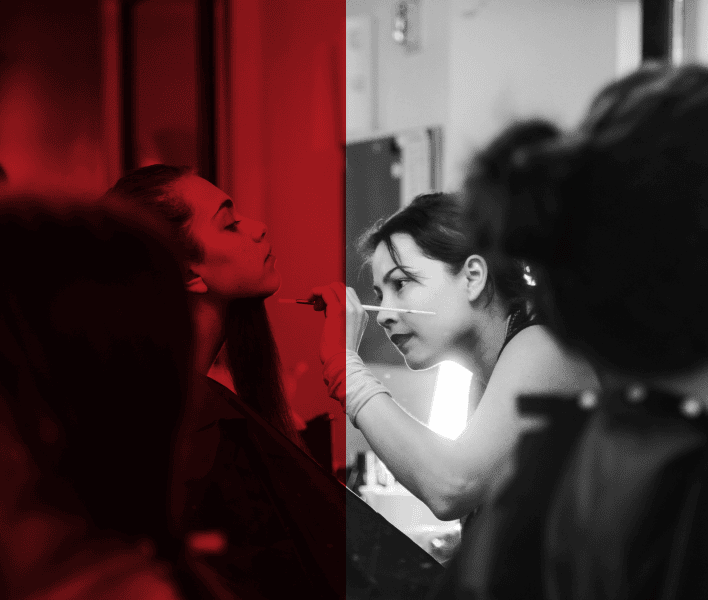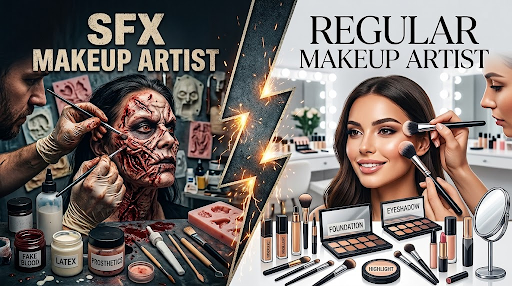
Makeup artists work across a wide range of industries, from film and television to fashion, theater, photography and live entertainment. While the goal is always to create a specific look, the techniques, materials and level of transformation can vary depending on the production.
For general facial feature enhancement, standard makeup artists typically work with traditional cosmetics. On the other hand, cinematic effects and physical character transformations often require SFX makeup artists.
Understanding how these roles differ can help aspiring makeup artists determine which skills, techniques and career path best align with their interests.

Roles and Responsibilities of Regular Makeup Artists
Regular makeup artists focus on enhancing natural features, creating polished appearances and adapting makeup to different clients, productions and visual settings. Their day-to-day responsibilities can include:
- Client Consultation & Preparation: Assesses skin type, tone and condition to select appropriate skincare and cosmetics while maintaining proper hygiene and sanitation.
- Feature Enhancement & Correction: Uses foundation, color correction, contouring and highlighting to refine facial features and create a balanced complexion.
- Style Adaptation: Creates looks suited to different settings, including beauty, bridal, fashion, editorial, commercial and everyday makeup.
- Product & Kit Management: Maintains a professional kit with suitable shades, formulas and tools for different skin tones, makeup requirements and production conditions.
Career Opportunities for Regular Makeup Artists
Regular makeup artists can build careers across:
- Beauty & Bridal
- Fashion & Editorial
- Film & Television
- Commercial & Advertising
- Photography & Media
Average Salary of a Standard Makeup Artist in the USA
According to ZipRecruiter, the average annual pay for a makeup artist in the United States is $52,605. This is an average salary, so actual earnings can be higher or lower depending on factors such as experience, the type of makeup work and location.
Roles and Responsibilities of SFX Makeup Artists
SFX makeup artists specialize in creating physical transformations that go beyond conventional cosmetic application. Their work can involve prosthetics, sculpting, specialized materials and practical effects to create injuries, aging, creatures, monsters and other character transformations. Their work can involve a range of specialized responsibilities, including:
- Character & Creature Design: Interprets scripts, concept art and production requirements to develop physical transformations such as aging characters, creatures, monsters, fantasy beings and traumatic injuries.
- Prosthetic Sculpting, Molding & Casting: Builds custom prosthetic pieces before creating molds and casting appliances from materials such as silicone, foam latex, gelatin, or other specialized materials.
- SFX Painting & Detailing: Uses specialized paints, pigments and color techniques to replicate realistic skin tones, bruising, wounds, burns, scars, textures and other surface details.
- On-Set Maintenance: Maintains the appearance of complex SFX makeup throughout production, making repairs and adjustments between takes while keeping the effect consistent across shooting days.
- Safe Application & Removal: Handles adhesives, prosthetic materials and removal products carefully, following appropriate safety and skin-care practices to protect the actor during application and removal.
Career Opportunities for SFX Makeup Artists
SFX makeup artists can pursue opportunities across:
- Film & Television Productions
- Prosthetic & SFX Studios
- Theater & Live Entertainment
- Commercials & Music Videos
- Horror, Fantasy & Sci-Fi Productions
- Theme Parks & Immersive Attractions
Average Salary of a Special Effects Makeup Artist in the USA
The average annual salary for a Special Effects Makeup Artist in the United States is $55,208, based on data shared by Comparably. For SFX makeup artists, earning potential largely depends on their skill level and technical expertise, while experience, location and production type can also influence earnings.
Can a Regular Makeup Artist Become an SFX Makeup Artist
Yes. A regular makeup artist can become an SFX makeup artist by learning techniques that go beyond traditional makeup application.
A regular makeup artist can start with basic effects such as wounds, bruises and scars, then learn more advanced techniques such as prosthetics, aging makeup and creature transformations.
Hands-on practice is important because special effects makeup involves working with different materials, tools and techniques. At Cinema Makeup School, we provide hands-on SFX makeup training to help aspiring artists develop the practical skills they need to pursue opportunities in the industry. Our alumni have taken these skills into professional productions, with credits including Zombieland, Renfield, Dave and Glass Onion.
Ready to see yourself working on film and television productions?
Join our SFX makeup programs and gain practical experience in a studio-based learning environment today.
Related Articles:
Freelance vs. Studio Work: Which SFX Career Path Should You Choose?
8 Sources Every SFX Makeup Artist Should Explore for Inspiration
Skills You Need to Grow from Junior to Senior SFX Makeup Artist
Differences Between Regular & SFX Makeup Artists
Although both roles involve makeup application, the two professions differ in several important areas, from the level of transformation to the techniques, materials and preparation involved.
1. Level of Transformation
Regular makeup primarily enhances or refines existing features, while special effects makeup can physically transform an actor’s appearance through prosthetics, appliances and practical effects.
2. Techniques Used
Regular makeup relies mainly on cosmetic techniques such as blending, contouring, highlighting and color correction. SFX makeup involves techniques such as sculpting, prosthetic application, mold making, casting and effects painting.
3. Materials and Tools
Regular makeup artists primarily work with cosmetics, brushes, sponges, palettes and skincare products. SFX artists may also work with prosthetic materials, sculpting tools, molds, adhesives, pigments and casting materials.
4. Preparation Required
A regular makeup look can often be created directly on the actor or client. Special effects makeup may require preparation in advance, including designing, sculpting, molding, casting, painting and fitting prosthetic pieces.
Want to see how these skills come together in practice? Book a tour of our campus and explore our classrooms, labs and student workspaces.
References:
- ZipRecruiter. (2026, August 27). Makeup artist salary. https://www.ziprecruiter.com/Salaries/Makeup-Artist-Salary
- Comparably. (2026, August 26). Special effects makeup artist salary. https://www.comparably.com/salaries/salaries-for-special-effects-makeup-artist