Creating realistic prosthetics begins long before an appliance is painted or applied to an actor. One of the most important stages in special effects makeup is mold making. A well-made mold captures every detail of a sculpture, allowing artists to reproduce prosthetics consistently and accurately.
Whether you’re creating facial prosthetics, creature appliances, wounds, horns, or body parts, choosing the right mold can directly affect the quality of the final result. Different materials and production methods require different types of molding techniques, which is why professional SFX artists learn several approaches throughout their careers.
What Are Molds in SFX Makeup?
An SFX mold is the negative impression of a sculpted design. Once completed, it becomes the form into which materials such as silicone, foam latex, gelatin, or urethane are poured or injected to create prosthetic appliances.
Without accurate molds, it would be difficult to produce multiple copies of the same prosthetic while maintaining consistent quality.
Commonly Used Mold Materials
- Ultracal 30
- Plaster
- Silicone
- Fiberglass
- Epoxy Resin
- Polyurethane Resin
Which Types of Molds Do SFX Makeup Artists Use
SFX artists use different types of molds depending on the design, material and production requirements of the prosthetic being created. Each mold type has its own advantages, from creating simple flat appliances to producing highly detailed creature pieces and silicone prosthetics. Understanding these molding techniques helps artists choose the right approach for achieving accurate and consistent results.
1. One-Part Mold
A one-part mold consists of only one mold half, it works best for sculptures that have a relatively flat surface and few or no undercuts. Beginners often start with this method because it is straightforward to build and requires fewer materials than more advanced mold systems.
One-part molds are commonly used for small wounds, scars, burns, skin textures and other flat prosthetic pieces. Although they aren’t suitable for highly detailed facial prosthetics, they provide an excellent solution for simple appliances that need to be reproduced quickly.
2. Two-Part Mold
When a sculpture has details on multiple sides or contains undercuts, artists typically move to a two-part mold. This molding method encloses the sculpture between two perfectly aligned mold halves, allowing complex shapes to be cast accurately.
Two-part molds are widely used throughout the entertainment industry because they offer both precision and versatility.
They are commonly used to create:
- Horns
- Pointed ears
- Creature noses with full 3D form
- Teeth and fangs
- Fingers, claws and other 3D prosthetic components
- Props and small creature parts
3. Matrix Mold
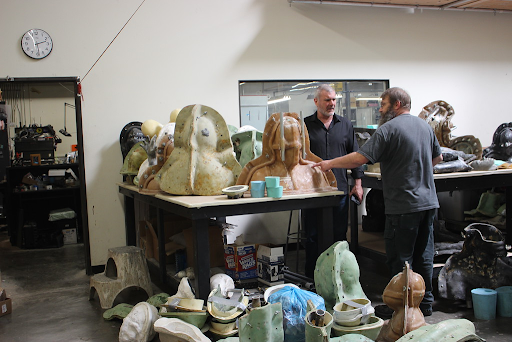
A matrix mold consists of two main components: a flexible silicone inner mold that captures fine surface details and a rigid outer support shell, typically made from fiberglass or plaster, that holds the silicone in its exact shape during casting.
This molding method is ideal for sculptures with intricate textures because the flexible silicone reproduces details such as pores, wrinkles and skin folds with exceptional accuracy. The rigid outer shell prevents the mold from shifting or deforming, ensuring consistent results throughout multiple castings.
Matrix molds are commonly used to create high-quality silicone prosthetics for feature films, television productions and other projects where realism is essential. Although they take more time and skill to build than simpler mold types, they are valued for their precision and durability.
4. Block Mold
The sculpture is placed inside a container (called a mold box) and liquid molding material is poured all around it until the sculpture is completely covered. Once cured, the mold is carefully cut open to remove the original sculpt, creating a flexible mold that accurately reproduces every surface detail.
Although block molds consume more molding material than some other methods, they are known for their durability and precision. They are particularly useful for smaller sculptures with intricate textures, such as custom teeth, miniature creature components, jewelry, or detailed prop pieces.
5. Brush-Up Mold
Unlike poured molds, brush-up molds are created by applying several thin layers of liquid silicone directly onto a sculpture with a brush. After the silicone cures, a rigid outer support shell is built around it to help the mold maintain its shape during casting.
This technique is especially useful when working on larger sculptures because it uses less silicone than a traditional block mold while still capturing intricate details.
Brush-up molds are often chosen for:
- Creature heads
- Monster busts
- Large body parts
- Highly textured sculptures
- Oversized props
Because the flexible silicone can easily wrap around detailed surfaces, artists can remove complicated sculptures without damaging either the mold or the original piece.
6. Jacket Mold
A jacket mold is designed to support flexible silicone molds rather than create castings on its own. Without this rigid outer shell, a silicone mold could flex or deform during casting, resulting in inaccurate prosthetics.
Mother molds are commonly made from materials such as Ultracal, fiberglass, or epoxy composites. They play an essential role in maintaining the mold’s original shape and ensuring every cast remains consistent from one production run to the next.
Although viewers never see this part of the process, it is one of the most important components of professional mold making.
7. Glove Mold
Some sculptures have complex shapes or areas that lock into a rigid mold, making them difficult to remove without causing damage. In these situations, artists often use a glove mold.
This mold consists of a flexible silicone layer that closely follows the sculpture’s shape. This silicone layer is then supported by a rigid outer shell that prevents the mold from losing its form during casting.
This method works particularly well for:
- Creature busts
- Hands
- Full heads
- Large statues
- Complex character sculptures
Its flexibility allows artists to remove castings more easily while preserving delicate details that could otherwise be damaged.
8. Injection Mold
Injection molds are designed for production environments where multiple prosthetics need to be cast efficiently and consistently. Instead of pouring material into an open mold, silicone or foam latex is injected through specially designed channels that distribute the material evenly throughout the mold cavity.
This process helps reduce trapped air, produces uniform wall thickness and creates prosthetics with fewer imperfections.
Injection molds are widely used for high-volume production of silicone facial appliances and foam latex prosthetics.
Worth Noting: Mold making combines sculpting, material knowledge and fabrication skills that are developed through professional training. Students enrolling at Cinema Makeup School gain not only theoretical knowledge but also hands-on experience to develop these essential techniques. Here, aspiring artists learn every step of the mold-making process, from clay sculpting to creating final molds.
Want to experience the environment where we train aspiring SFX artists firsthand? Book a tour of our campus.
Related Articles:
Why Your Sculpt Looks Great in Clay but Fails in Mold
What Kind of Clay Is Best for SFX Sculpting?
Advanced SFX Makeup Techniques Every Artist Should Master
How to Choose the Right Mold?
Choosing the right mold depends on several factors related to the sculpture, casting process and production requirements. SFX artists evaluate the project details carefully to select a mold that can capture the desired level of detail while making the casting process more efficient.
Some important factors to consider include:
- Complexity of the sculpture
- Presence of undercuts
- Casting material
- Number of copies required
- Budget
- Production schedule
- Required level of detail
- Ease of demolding
Do You Know?
Students at Cinema Makeup School are not only trained in SFX makeup techniques but have also contributed to major movies, TV productions and web series for OTT platforms. Below is a list of some productions featuring our alumni credits:
- Paranormal
- Next of Kin
- The Mandalorian
- Teen Wolf
- Zombieland
If you’re ready to develop your career as well, you can enroll in our SFX makeup courses or visit our campus in person/virtually to explore our facilities.