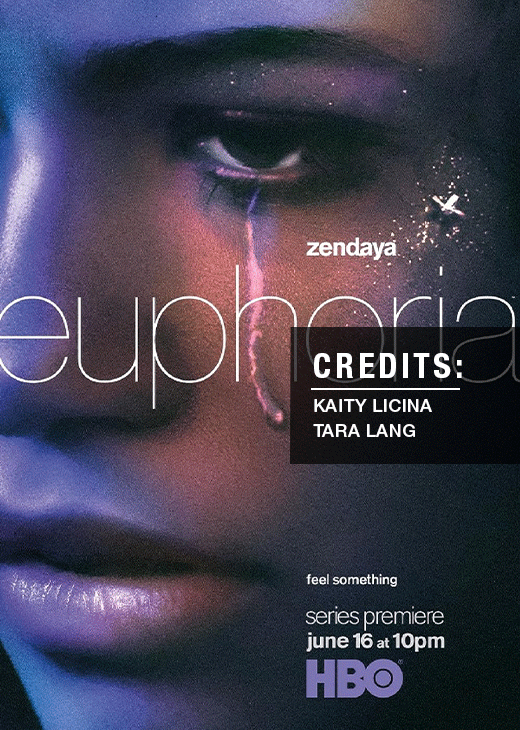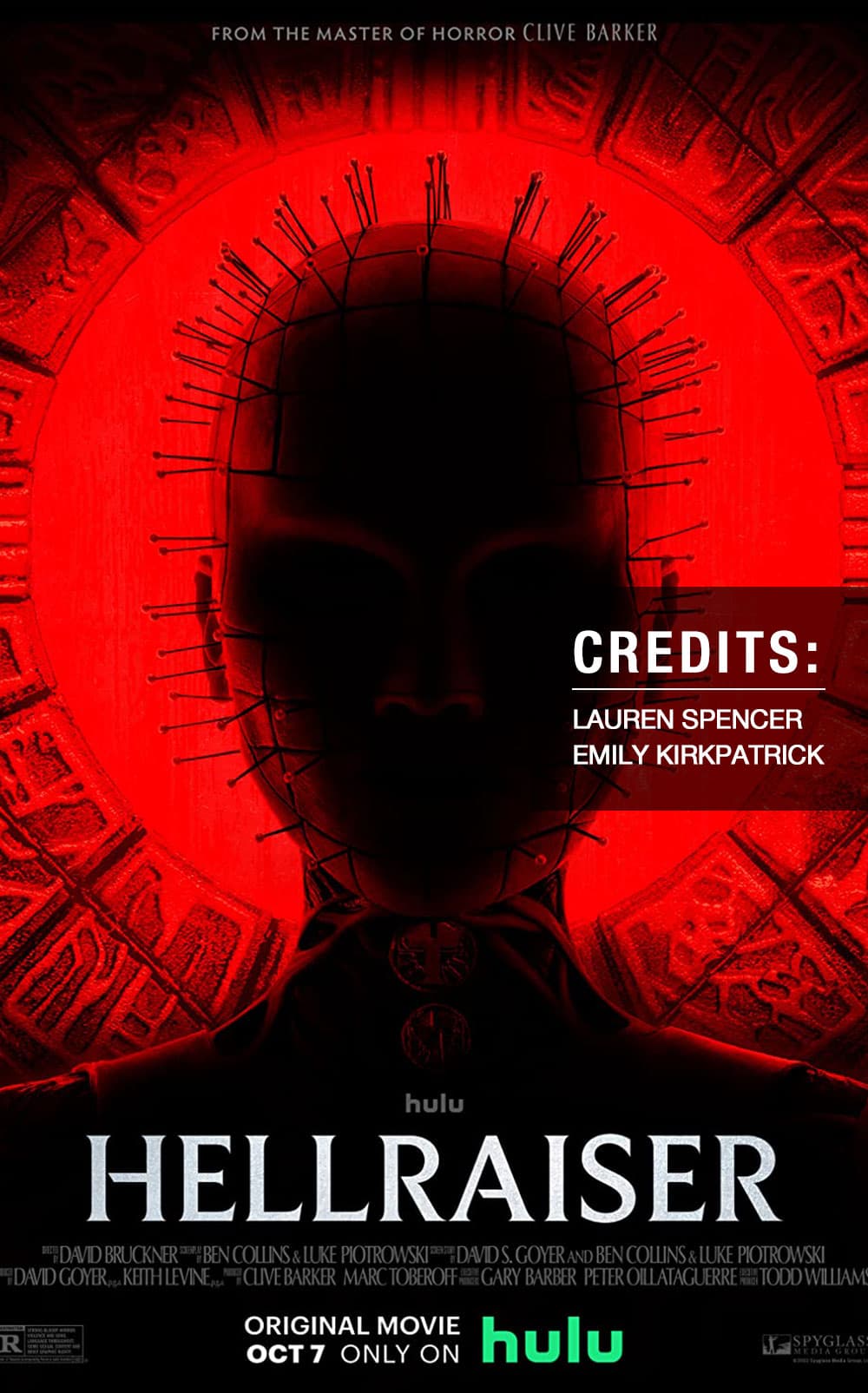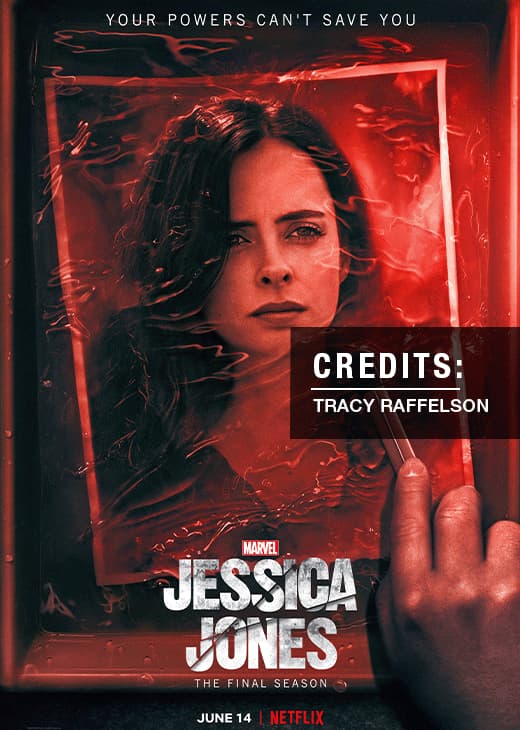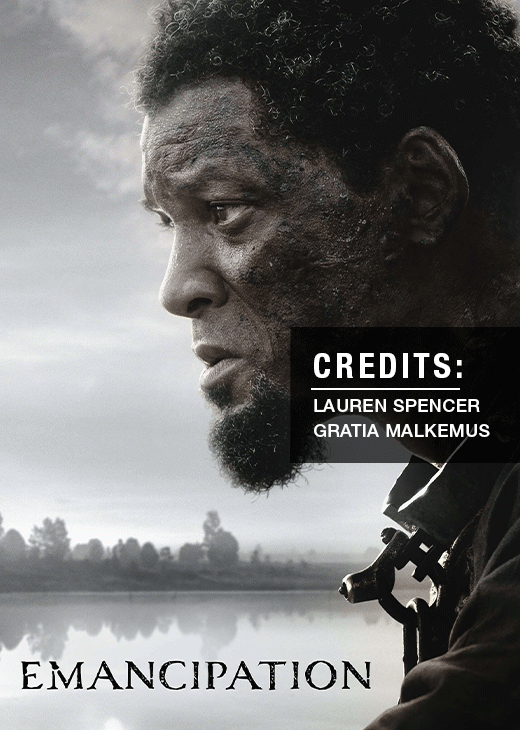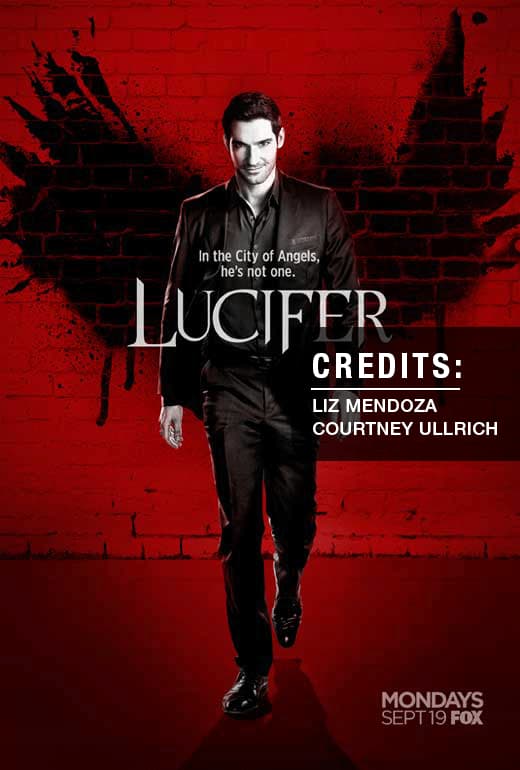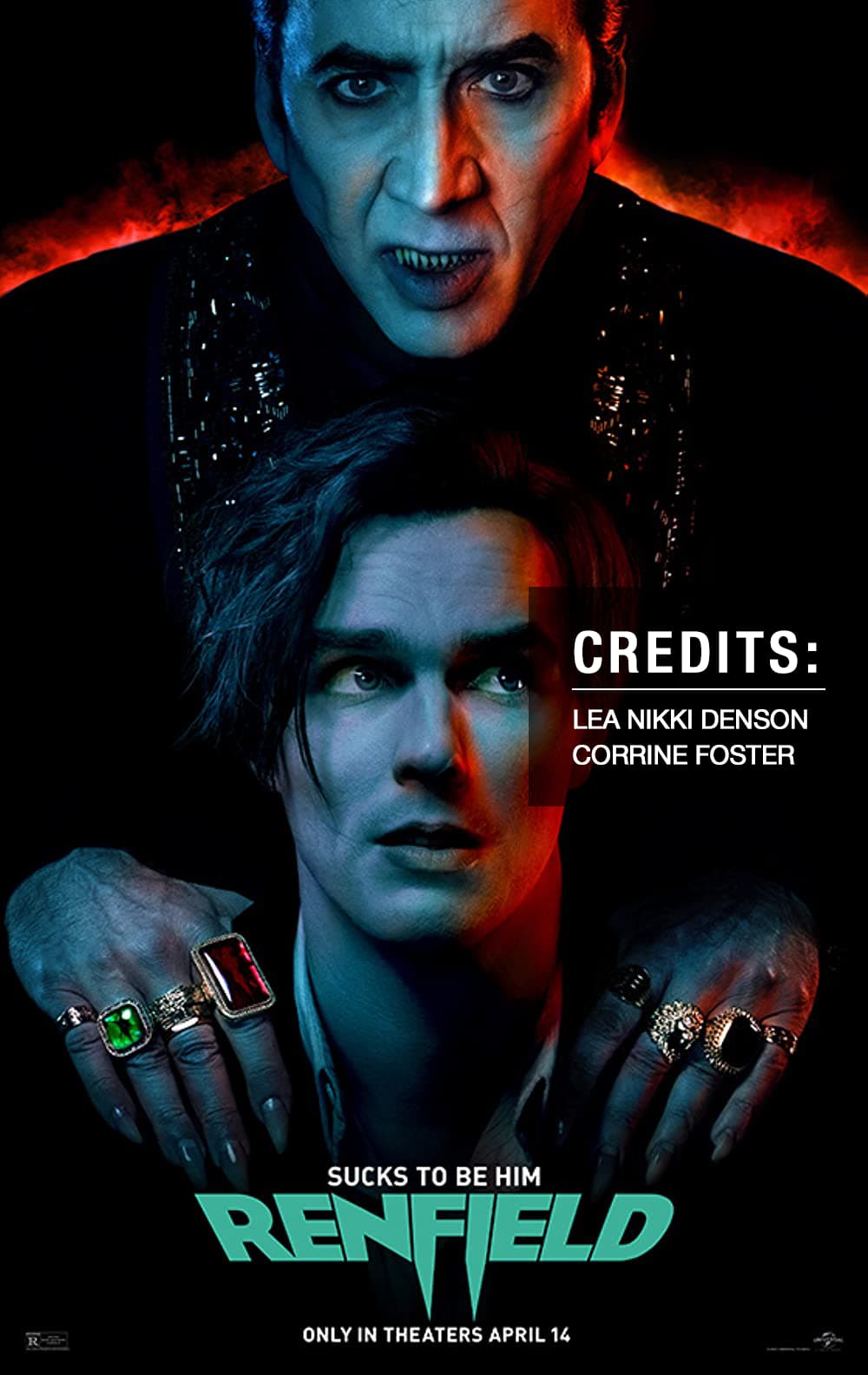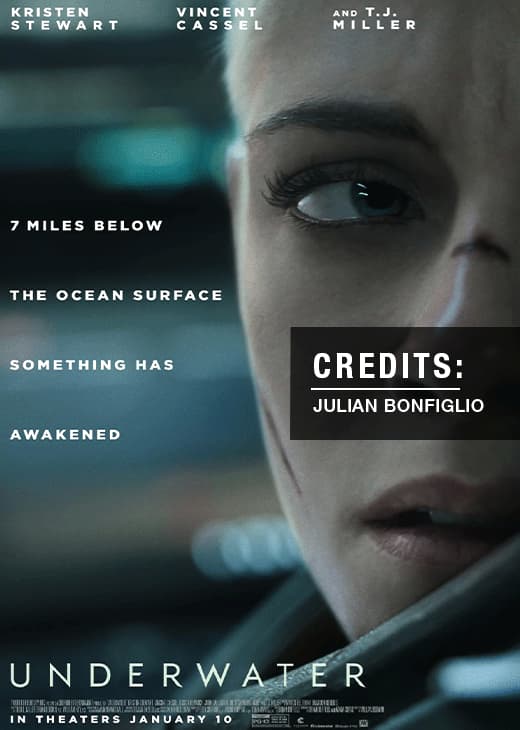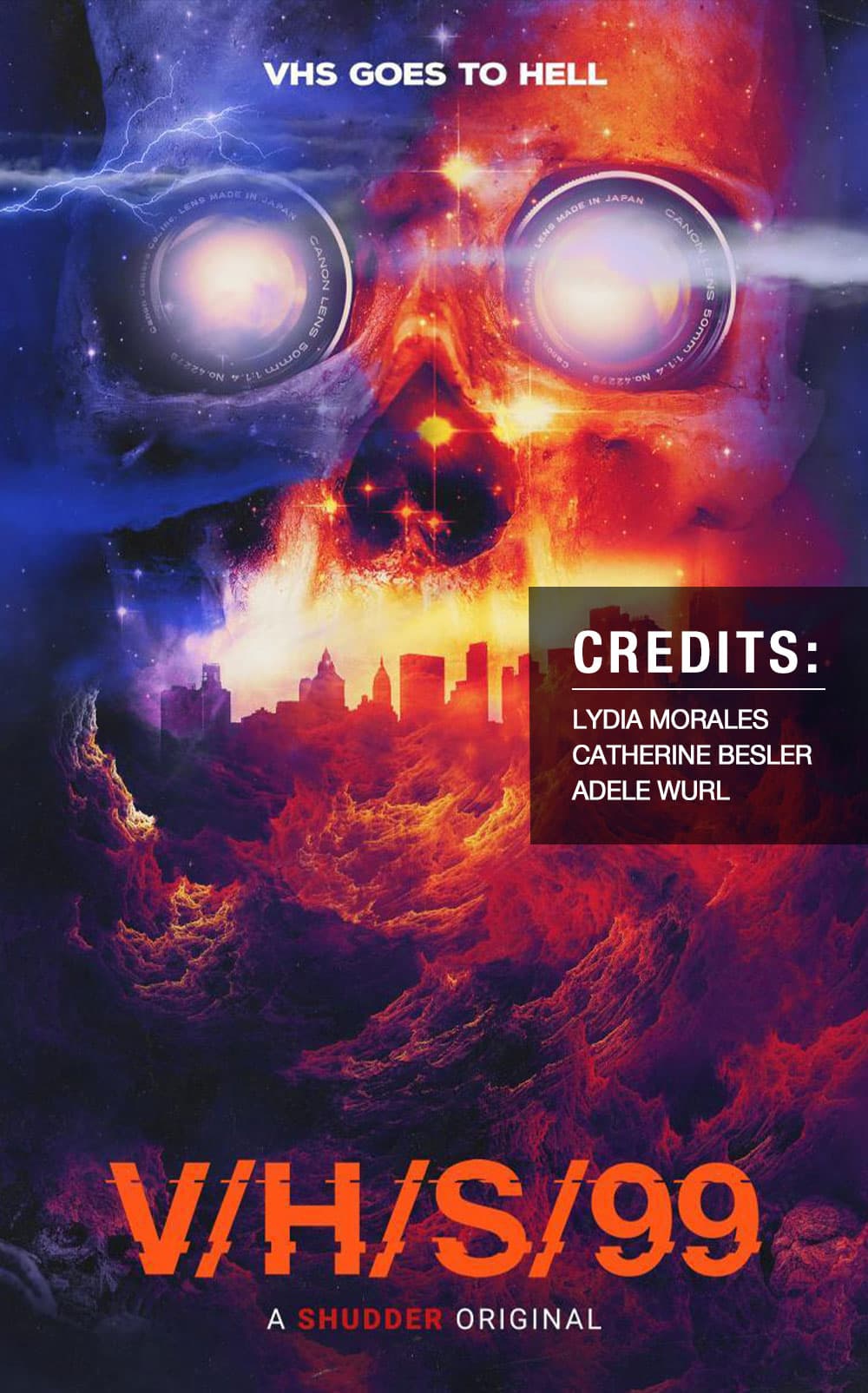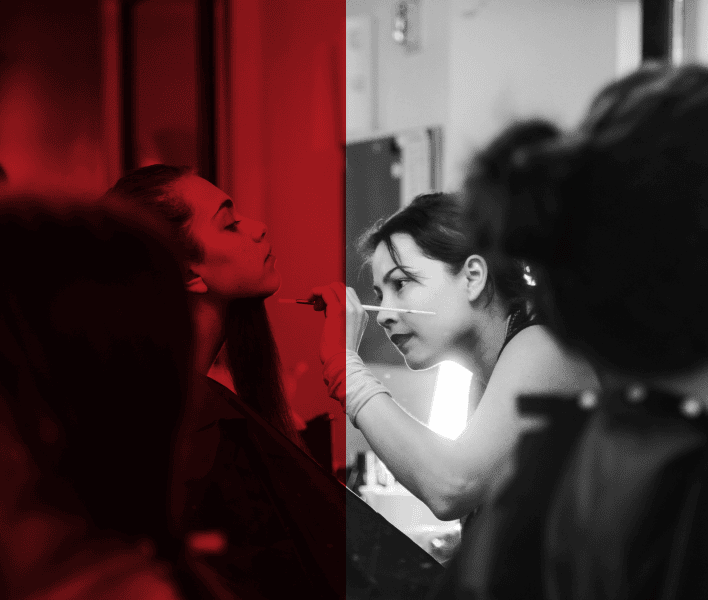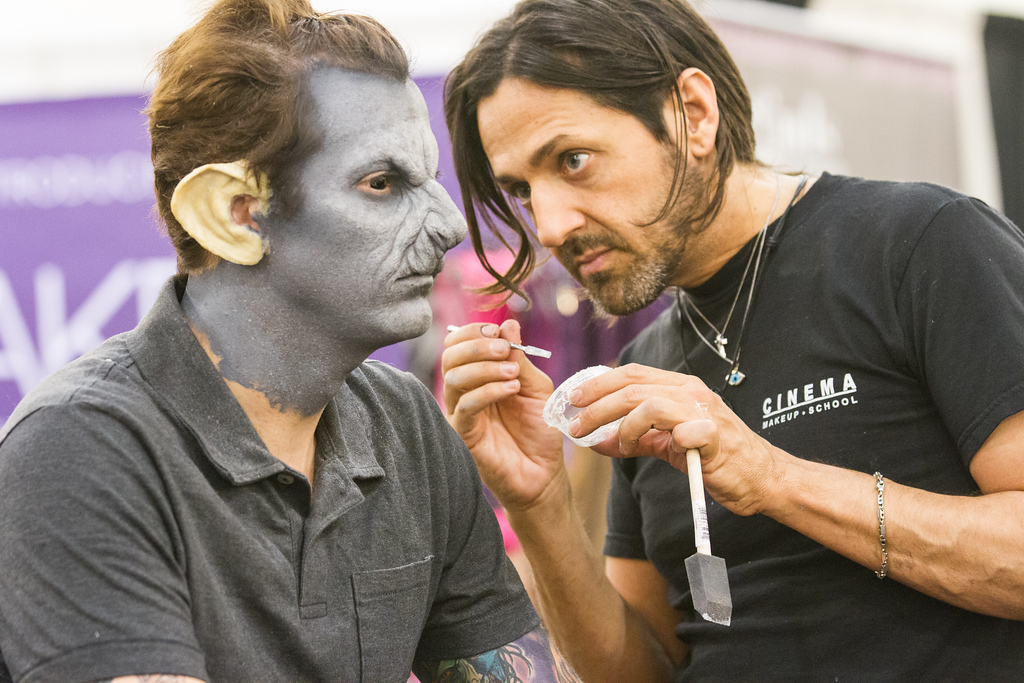
In horror makeup, when creating demon-possessed looks, the eyes play a key role in making the character believable to the audience. Special effects makeup makes this transformation possible. Artists may introduce redness, veining, or tonal shifts in the skin around the eyes to support the look, depending on the level of transformation required.
Because this work is done so close to the eyes, the process also requires careful material selection and safe application practices.
Let’s break down the professional approach to creating demon-possessed eyes, with attention to on-camera visibility and performer safety.
Different Types of Demon Possessed Eyes Created with SFX Makeup
Common types of demon-possessed eyes include blacked-out eyes, white or washed-out eyes, veined and bloodshot eyes, glowing or reflective eyes and distorted or altered iris designs, each created using different combinations of lenses and paintwork depending on the required level of transformation.
1. Blacked-Out Eyes
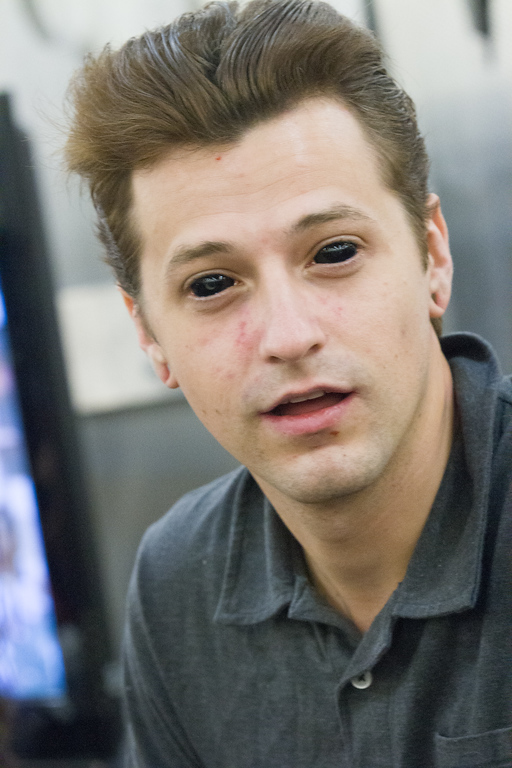
This look is created using blackout sclera contact lenses that cover the entire visible eye, removing all natural contrast between the iris and sclera. The surrounding skin is usually kept controlled, with slight darkening or neutral tones, so the focus stays on the eyes. It is commonly used for fully possessed or non-human characters where the effect needs to be read clearly even in wider frames.
2. White or Washed-Out Eyes
Special effects makeup artists use white or clouded lenses to remove detail from the eye and create a blank, lifeless appearance. To integrate the effect, subtle grey, blue, or yellow tones are added around the eye area. This prevents the lenses from looking isolated and helps the overall makeup feel consistent on camera.
3. Veined and Bloodshot Eyes
Instead of relying on lenses, this look is often built through paintwork. Alcohol-activated colors are used to add fine red veining, irritation and slight discoloration around the sclera and eyelids. In some cases, clear or lightly tinted lenses are added for a slight shift without fully covering the eye. This approach is effective for early possession stages or more grounded transformations.
4. Glowing or Reflective Eyes
The effect usually starts with reflective or specially finished contact lenses that react to light. On set, lighting is adjusted to create controlled highlights within the eye, giving the impression of a glow. In some cases, the effect is slightly enhanced in post-production, but it relies heavily on how the lenses and lighting work together during filming.
5. Distorted or Altered Iris Designs
Custom-designed lenses are used to change the shape, size, or pattern of the iris. These may include split designs, enlarged pupils, or irregular textures that break the natural symmetry of the eye. Supporting paintwork around the eye helps blend the lens into the overall look, so the distortion feels intentional rather than separate.
Also Read: How Makeup Artists Create Realistic Black Eyes for Fight Scenes?
Professional Techniques to Create Demon-Possessed Eyes
Creating demon-possessed eyes involves combining lenses, paintwork and on-set adjustments based on how the look needs to appear on camera. The process is usually handled in the following steps:
Step 1: Selecting the Right Contact Lenses
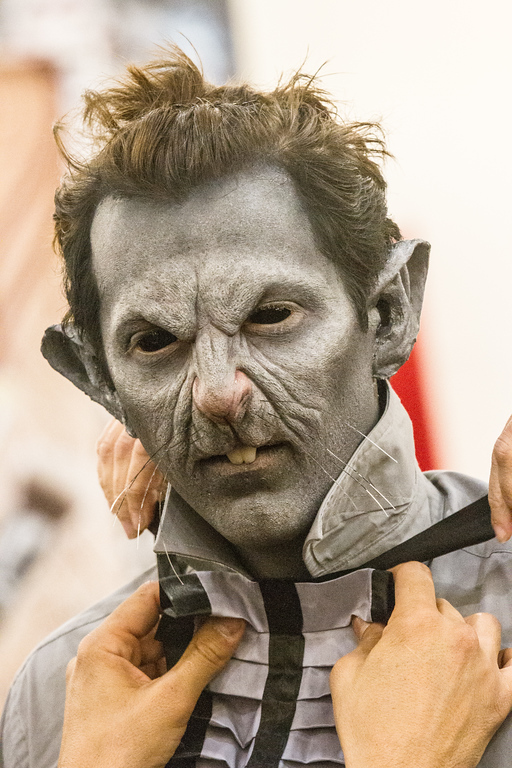
SFX makeup artists begin by choosing lenses based on the required eye effect. Blacked-out or white eyes require full or partial sclera lenses, while more subtle looks may use clear or lightly tinted lenses. The choice depends on visibility, comfort and how the eyes need to read in different shot sizes.
Step 2: Lens Fitting and Testing
Before filming, lenses are tested on the performer to check fit, comfort and visibility. Ensure the lenses sit correctly on the eye and evaluate how they appear under camera and lighting conditions. This step helps avoid issues during actual shooting.
Step 3: Preparing the Eye Area
Before applying any product, the skin around the eyes is cleaned and prepped. This ensures proper adhesion of makeup and reduces the risk of irritation, especially during long shoot days.
Step 4: Building the Base Eye Effect
Once lenses are applied (or planned), artists establish the primary look. This may involve placing the lenses first or beginning with paintwork if the design relies more on surface detail. The base defines whether the look is extreme, subtle, or in transition.
Step 5: Lens Insertion
Contact lenses are inserted once the eye area is ready and the initial prep is complete. This step is done carefully to avoid irritation and timing is managed to ensure the performer is not wearing lenses longer than necessary.
Step 6: Adding Paintwork and Detail
For effects like veining, redness, or discoloration, artists use alcohol-activated palettes to create fine detail around the sclera and eyelids. This step helps integrate the eye effect into the surrounding skin so it does not appear isolated.
Step 7: Blending with Surrounding Makeup
The eye design is then blended with the rest of the character’s makeup. Shading, tonal adjustments and texture are added to ensure the eyes feel part of the overall look rather than a separate element.
Step 8: Adjusting for Lighting and Camera
On set, artists often make small adjustments based on lighting conditions. Reflective lenses, for example, may require controlled highlights, while darker eye designs may need additional contrast to remain visible on camera.
Step 9: Final Checks for Safety and Continuity
Since the work is done close to the eyes, safety is critical. Special effects makeup artists monitor lens wear time, ensure all materials are eye-safe and maintain hygiene. Continuity is also tracked so the eye design remains consistent across multiple takes and shooting days.
Learn the Importance of Hygiene and Safety in SFX Makeup Careers
Build Skills to Create Demon Possessed Eyes
Creating convincing demon-possessed eyes requires skills in anatomy, color theory, prosthetics, material handling, hygiene and on-set workflow. Aspiring artists are trained through hands-on, industry-focused SFX makeup courses at Cinema Makeup School.
Whether you’re starting with character makeup or looking to expand into advanced techniques, our programs cover a complete, production-focused curriculum, including:
Apply here to join SFX makeup courses at Cinema Makeup School.
Safety and Professional Standards for Creating Demon-Possessed Eyes
- Use only certified, sterile and eye-safe contact lenses
- Never share lenses between performers
- Ensure proper lens storage and handling at all times
- Allow only trained professionals to handle lens insertion and removal
- Sanitize hands, tools and workspace before working near the eyes
- Limit lens wear time, especially with sclera lenses
- Schedule regular breaks to reduce dryness and irritation
- Use makeup products that are safe for the eye area
- Avoid harsh adhesives or pigments near the eyes
- Maintain strict hygiene to prevent contamination
- Monitor the performer for redness, discomfort, or vision issues
- Pause immediately if irritation or pain occurs
- Repeat safety checks during every reapplication
Related Articles –
How to Create a Facial Distortion Effect with SFX Makeup?
5 Skills Every SFX Makeup Artist Should Master for Monsterpalooza
Easy Alien Makeup Ideas for Beginners
If you’re considering joining, book a tour of our campus through an in-person or virtual tour.