When people think of special effects makeup, they usually imagine monsters, zombies, aliens, or realistic injuries. However, SFX artists also create objects that look surprisingly real, such as fruits. From an apple-shaped face to a strawberry-inspired character or a realistic fruit prop worn by an actor, fruit makeup combines artistic creativity with technical special effects makeup skills.
Creating fruit makeup is much more than simply painting bright colors. Artists carefully study the fruit’s shape, texture, color variations and surface details before recreating them with prosthetics and professional makeup techniques.
Let’s understand everything from the first sketch to the final fruit makeup.
What Is Fruit Makeup?
Fruit makeup is a type of special effects makeup that transforms a person into a realistic or stylized fruit character. Artists use techniques such as sculpting, prosthetic application, painting and texturing to recreate the shape, colors and surface details of fruits like apples, oranges, strawberries, pumpkins and watermelons.
Although fruit makeup looks fun, it requires professional special effects makeup skills.
Artists often combine knowledge of:
- Character design
- Sculpture
- Mold making
- Prosthetic fabrication
- Color theory
- Airbrushing
- Painting
- Texture creation
- Material selection
- Makeup application
Learning these skills allows artists to create not only fruit makeup but also creatures, fantasy characters, animals and many other special effects designs.
Note: At Cinema Makeup School, students receive hands-on training through comprehensive SFX makeup courses. Under the guidance of experienced instructors, they learn how to design, sculpt, mold, paint and apply professional prosthetics while building the practical skills needed for the entertainment industry.
The training has helped many graduates contribute to major film and television productions, including The Book of Boba Fett, The Mandalorian, Guardians of the Galaxy Vol. 3 and Marvel’s Avengers projects.
Whether your goal is to create imaginative fruit characters, realistic creatures, or complex prosthetic effects, developing a strong foundation in special effects makeup can open the door to a wide range of creative career opportunities.
Step-by-Step Process of Creating Fruit Makeup
Here’s how SFX artists bring fruit to life.
1. Start by Studying the Fruit
Every successful SFX project begins with observation.
SFX artists examine the fruit from every angle, paying attention to details such as:
- Overall shape
- Surface texture
- Color variations
- Natural imperfections
- Shine or matte finish
- Stem, leaves, or seeds
For example, an orange has tiny pores across its skin, while a strawberry has small seeds embedded into its surface. These small details make the final makeup look much more believable.
Many artists also collect reference photos under different lighting conditions before beginning the design.
Learn Why SFX Makeup Artists Should Study Human Anatomy for Realistic Prosthetics
2. Design the Makeup Concept
The next step is deciding how the fruit will appear.
The makeup could be:
1) A person transformed into a fruit
2) A fantasy fruit creature
3) A damaged or decaying fruit
4) A talking fruit character
5) A realistic fruit growing from the skin
At this stage, special effects makeup artists create sketches or digital concepts to plan where prosthetics will be placed and how the finished design should look.
Planning first helps avoid problems during sculpting and application.
3. Sculpt the Fruit Shape
Once the concept is approved, SFX artists begin sculpting the fruit design in clay. This step transforms the sketches into a three-dimensional model that captures the fruit’s overall shape and distinctive features.
During sculpting, artists carefully recreate details such as the fruit’s curves, surface patterns and natural imperfections. Depending on the design, they also sculpt elements like stems, leaves, or other unique characteristics to make the fruit character more realistic.
The completed sculpture serves as the master model for creating the prosthetic appliance that will later be applied to the actor.
4. Make the Prosthetic
After sculpting is complete, artists create a mold.
The mold is then filled with materials such as:
- Silicone
- Foam latex
- Gelatin
Each material has different advantages.
Silicone is popular because it moves naturally with facial expressions and creates realistic skin textures. Foam latex is lightweight, while gelatin is often used for short-term makeup applications.
Once cured, the prosthetic is carefully removed from the mold and trimmed.
5. Apply the Prosthetic
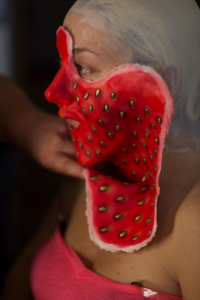
The prosthetic is attached using professional adhesives designed for movie makeup. Once it is securely in place, artists carefully blend the edges into the actor’s skin so they become nearly invisible on camera.
To create a seamless transition, SFX artists often use blending products and match the prosthetic’s color to the performer’s natural skin tone. Any visible differences are corrected with makeup, airbrushing, or hand painting so the appliance looks like a natural part of the skin rather than something applied on top.
Even a well-made prosthetic can appear unrealistic if the edges are noticeable or the colors do not match the surrounding skin.
This stage requires patience and precision.
Also Read: How to Blend Prosthetics Into Skin?
6. Paint the Fruit Colors

Painting is the stage where the fruit design begins to look realistic. Artists build multiple thin layers to recreate the natural color variations found in real fruit.
For example, a strawberry is not simply painted red. Artists may begin with a lighter pink or red base, gradually add deeper red tones for depth, darken recessed areas to create shadows and finish with brighter highlights to mimic the way light reflects off the fruit. The small seeds are then carefully painted or accented with yellow or gold tones to make them stand out.
Airbrushing is often used to create smooth color transitions across the prosthetic, while hand painting helps add fine details, subtle imperfections and realistic depth.
7. Add Texture
After painting, SFX artists begin creating the fruit’s surface texture using a variety of techniques and tools.
Common fruit textures include:
- Orange peel texture
- Strawberry seeds
- Banana marks
- Watermelon stripes
- Coconut fibers
- Lemon pores
For example, the tiny seeds on a strawberry can be created by pressing small indentations into the sculpt with a pointed sculpting tool or toothpick before molding. The seeds are then highlighted with paint to make them stand out.
To create an orange peel, artists often use textured sponges or stippling tools to produce the fruit’s characteristic dimpled surface. Fine brushes and specialty tools are also used to add pores, ridges and other natural details that complete the look.
These small textures help the fruit makeup appear more realistic, especially in close-up shots where every detail is visible.
8. Create a Realistic Finish
Some fruits are glossy. Others have a soft matte appearance.
These finishes are created using sealers and finishing products.
For example:
- Apples often have a glossy finish.
- Peaches have a softer appearance.
- Grapes usually have a slight natural shine.
- Strawberries have a gentle sheen with highlighted seeds that catch the light without appearing overly glossy.
Related Articles:
How to Create Micro-Details (Pores, Veins, Freckles) in Prosthetics
Best Sealing Techniques for Long-Lasting Prosthetics in SFX Makeup
How SFX Artists Create Demon Possessed Eyes for Horror Makeup Looks
Where Is Fruit Makeup Used?
Fruit makeup appears in many creative projects, including:
1) Film productions
2) Television shows
3) Commercials
4) Music videos
5) Theme parks
6) Live performances
7) Halloween attractions
8) Art exhibitions
9) Social media content
10) Creative photoshoots
As creative productions continue to look for artists with advanced prosthetic and painting skills, professional training can help you prepare for a wide variety of creative projects.
Enroll at Cinema Makeup School or schedule a tour of our campus, located in Los Angeles, to explore our training facilities.