The field of Special Effects makeup is evolving and so is the way artists learn it.
Today, aspiring makeup artists can choose between two main paths: enrolling in an in-person special effects makeup course or joining a flexible, remote online SFX makeup course. Both offer valuable training, but each comes with its own approach, tools and experience.
As more students seek accessible and career-focused education, understanding the differences between online and classroom-based programs is crucial.
This blog will walk you through a detailed comparison of both formats. Whether you’re just getting started or considering a shift in your learning style, this guide will help you make an informed choice that fits your goals, schedule and learning preferences.
Let’s take a closer look at how these two learning methods compare in terms of environment, flexibility, materials, portfolio building and career outcomes.
Why Special Effects Makeup Courses are in Demand?
Special Effects (SFX) makeup is a unique combination of creativity and technical precision. It brings together prosthetics, latex, silicone molds, painting, airbrushing and even digital techniques to create realistic injuries, fantasy creatures and unforgettable character transformations.
What was once limited to film and television has now expanded into a wide range of industries – from video games and theme parks to theater, cosplay, haunted attractions and online content.
With the growing demand for more immersive and visually striking effects, the industry now requires more skilled MUAs than ever before. As a result, there’s been a noticeable rise in SFX makeup courses, both in-person and online, designed to train the next generation of artists.
Whether you’re planning to work on movie sets, design characters for live shows, or create digital-ready effects for your portfolio, getting the right training is a key step toward building your career.
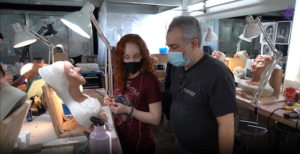
Worth Noting: Cinema Makeup School is dedicated to training aspiring makeup artists in the craft of special effects makeup. With a focus on both creativity and real-world application, we offer a range of programs that cover everything from prosthetics and character design to on-set techniques and digital FX. Students gain hands-on experience using industry-standard tools, working alongside experienced instructors who bring knowledge from film, TV and live entertainment. The goal is simple: to equip artists with the skills, confidence and professional foundation needed to succeed in the competitive SFX makeup.
Comparing In-Person and Online SFX Makeup Courses
To help you make an informed decision, we’ve broken down the core differences that cover key areas like learning environment, access to tools, scheduling flexibility, instructor interaction, portfolio development and career opportunities. Let’s take a closer look:
1. Learning Feels Different in a Physical Classroom and a Digital Space
In a classroom setting, you’re surrounded by instructors, peers, models and live demos. You can touch materials, feel textures and observe subtle techniques up close. This immersive setting mimics real-world scenarios and helps you build hands-on experience in a controlled, professional space.

Online learning takes place in a digital studio – your screen. Lessons may be live-streamed or pre-recorded, giving you the ability to pause, replay and learn at your own pace. While you won’t be in a physical room with others, features like virtual forums, live feedback sessions and student communities help you stay connected with instructors and classmates.
2. Tools and Materials: Provided or Self-Managed
When you attend an in-person special effects makeup training session, materials are usually provided as part of the program. Schools offer access to professional-grade prosthetic tools, airbrush kits, sculpting clay, lifecasting gear and more. Instructors often walk you through usage in real-time.
Online SFX Makeup Courses: In online formats, students typically purchase kits separately. Some platforms ship curated kits, while others provide supply lists. You’ll be working in your personal space. While you may not have access to every tool used in the industry, you’ll learn how to adapt and experiment. At CMS Digital Studios, materials are provided to you within the course price, as long as you live within the continental United States.
3. Fixed or Flexible Schedules? Choose What Fits You
One of the biggest advantages of online courses is flexibility. You can learn anytime, anywhere. This is ideal for working professionals, parents, or students with other commitments. Online learning adapts to your lifestyle, no matter your time zone or preferred study hours, including late-night sessions.
Physical classes operate on fixed schedules. This structure helps build discipline and routine, but it can be challenging for students with unpredictable commitments or limited flexibility.
4. Get Instructor Interaction Your Way
In-Person Courses: Face-to-face instruction allows for immediate feedback. Instructors can correct your hand position, tweak your brushwork, or demonstrate subtle detailing techniques on the spot. This real-time interaction helps refine your artistry.
Online SFX makeup courses provide feedback through recorded videos, messages, or virtual critiques. While instruction is delivered remotely, these formats still offer meaningful interaction and support throughout the learning process.
5. How You Network Depends on Where You Learn
Learning in a physical classroom puts you in direct contact with peers, instructors, models and actors, creating valuable opportunities for collaboration and connection. You’re part of a local creative environment, which can be especially helpful if you’re aiming to work in your city’s film, theater, or entertainment scene. Group projects, hands-on workshops and in-person events naturally foster a strong sense of community and teamwork.
Many online programs host student forums, Slack channels and private Facebook groups to help build community. However, the energy of a live studio, hallway banter, or lunchroom networking is hard to replicate virtually.
6. Your Wallet and Location Might Decide for You
Generally, online SFX makeup courses are more affordable. You save on housing, commuting and studio fees. Additionally, online learning is accessible globally – no need to relocate or travel.
In-person programs usually cost more because they include materials, studio access and hands-on training. They often offer stronger certifications and access to industry tools and connections. However, if you’re studying in a major city, additional expenses like travel, rent and living costs can increase your total investment.
7. Certification and Portfolio Building
Many in-person special effects makeup courses culminate in portfolio-ready photoshoots, film projects, or runway showcases. You work on camera-ready pieces with direction from industry experts. This real-world experience plays a key role in developing a strong portfolio, providing high-quality project work and visual documentation to effectively showcase your skills to potential employers and clients.
Online SFX makeup courses may provide portfolio assignments and suggest DIY photo setups to capture your work. Some offer feedback and review your work digitally. However, building a studio-quality portfolio at home requires extra effort and equipment.
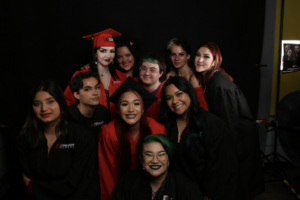
Curious What Learning with Us Looks Like? Check out how students confidently craft complex SFX makeup looks!
8. Career Placement and Industry Exposure
In-person SFX makeup courses often include built-in opportunities to connect with the industry. These may involve career guidance, guest lectures from working professionals, on-set internships and networking events. Students might also attend conventions, job fairs, or live productions where they can build real-world connections and gain exposure to potential employers.
Many online courses offer career-focused resources such as resume reviews, portfolio feedback, alumni networks and virtual mentorship. Some programs also connect students with industry professionals through webinars, online events, or collaborative projects. While the format is remote, students can still build industry connections and gain career insights through digital platforms and global communities. Although online courses have their advantages, nothing beats learning from experts hands on.
Book a tour or apply now to Cinema Makeup School to learn how to become a professional makeup artist in person.
Don’t miss these guides:
Career Options for Special Effects Makeup Artists
How Cinema Makeup School’s SFX Makeup Course Brings Seasonal Characters to Life?
How To Become a Makeup Artist for Films?
Short on Time but Still Want Real-World Training?
No problem! Cinema Makeup School offers short-term bootcamps and workshops designed to deliver hands-on, practical training in a condensed time frame. Get more info here!
How to Choose the Right SFX Makeup Course Format?
Deciding between an in-person or online SFX makeup course depends on your goals, preferences and lifestyle. Both formats offer valuable training, but the right choice varies for each student. Key factors to consider include your career goals, learning style, schedule, budget, location and access to tools. Evaluating these areas will help you choose the format that best supports your path in special effects makeup.
- Career Goals – Consider the type of work you want to pursue and how each format supports that path.
- Learning Style – Think about how you absorb information best, hands-on instruction or flexible, self-paced learning.
- Schedule & Commitments – Factor in your availability, work hours, or family responsibilities.
- Budget & Location – Account for tuition, travel, housing (for in-person), or tech and materials (for online).
- Access to Tools – In-person courses often supply professional equipment; online learners may need to build their own kit over time.
Interested in Becoming an SFX Artist? Take a tour of Cinema Makeup School in Los Angeles today!
Makeup goes far beyond color and contour, it’s the art of complete transformation. If you’re aiming to craft creatures, sculpt wounds, or build unforgettable characters, one skill will push your artistry from impressive to legendary: mold-making.
Think about the most jaw-dropping special effects you’ve seen, those realistic burns, fantasy creatures, or full facial transformations. Behind each of those looks is a mold: carefully sculpted, cast and applied to turn imagination into reality.
Learning how to create custom molds is a foundational technique for any makeup artist who wants to go beyond beauty and into full-blown character design.
This guide will show you why mold-making is essential, how it fits into your career as a serious artist and even walk you through a beginner’s take on how to make molds that actually fit, flex and perform on set.
Mold-Making: Backbone of Professional Special Effects Makeup
Mold-making is the process of capturing the shape of a three-dimensional object (like a sculpted prosthetic piece) to reproduce it accurately in different materials, typically silicone, latex, foam, gelatin and more.
A mold allows for the creation of repeatable, custom-fit pieces that look lifelike, move realistically on the skin and stay consistent throughout production. It’s how movie monsters, aging makeup, fantasy creatures and even delicate beauty effects are brought to life.
Without mold-making, there is no full transformation, only half-finished illusions.
Learn How to Create Creature Design Using Latex, Silicone & Prosthetics?

Why Mold-Making Is a Must-Have Skill for Career-Focused Makeup Artists?
Learning mold-making empowers makeup artists to move beyond basic application and become full creative forces in production. It allows for original, reusable prosthetics, increases your value on set and enables hyper-realistic designs that meet today’s high-definition standards. From saving time and money to collaborating across departments, mold-making is an essential skill for any serious, career-focused SFX artist.
1. You’re Able to Unlock True Creative Freedom
When you know how to make molds, you’re no longer limited by what’s available off the shelf. You’re free to design custom prosthetics from scratch, sculpt your creature concept and turn it into a reusable, wearable piece that fits your exact artistic vision.
This freedom is especially important when working on productions that demand originality – horror films, sci-fi series, fantasy theater, cosplay competitions, or concept photo shoots. A mold you design can capture expressions, textures and asymmetries that no store-bought appliance ever could.
Bonus: Once you create a mold, you can reproduce it consistently, perfect for projects that require multiple takes, stunt doubles, or touring stage productions.
2. You Will Enhance Your Marketability in Film, TV & Theater
Today’s entertainment landscape demands versatility. Production teams aren’t just looking for makeup artists; they want creators who can conceptualize, sculpt, fabricate and apply. Mold-making proves you’re more than just an applicator; you’re a builder of characters from the ground up.
When you can take a design from idea to wearable prosthetic, you become invaluable to any project. Whether you’re working on a sci-fi epic, a period drama, or a live theatrical performance, your ability to mold custom pieces ensures every character looks distinct and production-ready.
Studios value artists who can bring their own creations to life because it saves time, reduces dependency on external vendors and guarantees originality.
3. Create Hyper-Realistic Prosthetics
In a high-definition age where every wrinkle and pore is captured on screen, realism is everything. Mold-making allows you to produce prosthetics that look natural, move with the actor’s face and hold up under close-up shots.
Silicone and foam latex are today’s go-to prosthetic materials because of their flexibility and skin-like quality. A well-made mold ensures that every cast is:
- Skin-tight for comfort and believability
- Repeatable for continuity across shooting days
- Every vein, pore and scar was sculpted with meticulous detail.
From burn scars and zombie bites to fantasy creatures and age prosthetics, everything starts with a good mold. The better your mold, the better your makeup.
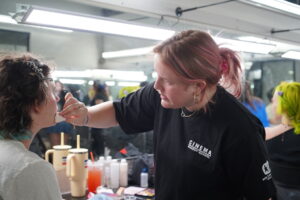
4. You’re able to Save Time and Money
Investing time in mold-making may seem like extra work upfront, but it’s a huge time-saver. Once you’ve sculpted and molded a piece, you can replicate it quickly for future jobs, clients, or productions.
You also save money by not having to resculpt the same piece over and over again.
5. Collaborate Seamlessly with Other Creative Departments
SFX makeup artists frequently collaborate with costume teams, prop builders and VFX specialists to bring characters fully to life. When you understand mold-making, it becomes easier to build appliances that integrate with costumes, helmets, armor, or animatronics.
Your work becomes part of a larger visual story and your ability to design functional, wearable prosthetics that fit into the big picture strengthens your value across departments.
Learn Mold-Making at Cinema Makeup School
Want to bring your makeup creations to life from the ground up? You are at the right place! Cinema Makeup School’s Special Effects Makeup Course is built for artists ready to go beyond the basics.
At Cinema Makeup School, we offer hands-on training in sculpting, mold-making and prosthetic design that prepares students for real-world work in film, television, theater, cosplay and medical simulation.
Common Materials Used in Mold-Making
Understanding the different materials used in mold-making is essential for creating prosthetics that are effective, comfortable and production-ready. Each type of mold – silicone molds, plaster molds, latex molds, alginate molds, gelatin molds and polyurethane molds – serves a specific purpose in the special effects makeup industry.
Here’s a detailed look at each one, when to use them and why mastering them matters for every serious makeup artist:
A. Silicone Molds
Silicone molds are the gold standard in special effects makeup due to their flexibility, durability and ability to capture ultra-fine detail. These molds are commonly used to produce high-quality prosthetics that are applied directly to the skin.
Ideal for: Custom facial prosthetics, lifelike wounds, fantasy creatures and reuse.
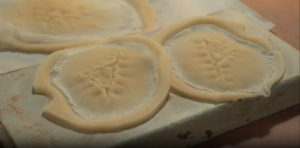
If you need to create elf ears, burn scars, or a full-face creature appliance that’s reusable and flexible, silicone molds are your go-to.
Watch how silicone heads are created in this video:
B. Plaster Molds
Plaster molds or rigid molds are typically used to support flexible materials like silicone or gelatin. They’re also common for creating the initial positive cast from a life mold made with alginate.
Ideal for: Mother molds, lifecasting support and flat molds.
A plaster mold might be used to support a silicone lifecast of a model’s face, helping to keep the soft mold in shape while casting prosthetic pieces.
C. Latex Molds
Latex molds are traditionally used for making masks and small appliances. While they are less commonly used for high-end prosthetics today, they’re still useful for fast, low-cost applications and lightweight builds.
Ideal for: Mask making, haunted house props and hobby projects.
⚠️ Caution: Latex can degrade over time and isn’t ideal for high-detail or skin-contact prosthetics. It is great for making simple zombie masks or theatrical pieces that don’t require fine realism or skin-safe materials.
D. Alginate Molds
Alginate Molds are commonly used in lifecasting – making quick, detailed impressions of a person’s face, hands, feet, or other body parts. Alginate is skin-safe and fast-setting, making it perfect for capturing body contours.
Made to handle: Life casting (one-time use)
Use alginate molds when you need a mold of an actor’s face to sculpt a custom prosthetic.
E. Gelatin Molds
While gelatin is more commonly used for casting prosthetics than creating molds, gelatin molds can be used for practice or short-term effects. Gelatin molds are ideal for quick-turnaround projects or when working on a tight budget.
Ideal for: Practice pieces and single-use FX
A gelatin mold might be used to create a temporary scar or wound piece for a live performance or classroom demo.
F. Polyurethane Molds
Polyurethane molds are rigid and durable, often used for prop and costume fabrication rather than direct skin contact. They hold up well for industrial use or when casting hard materials like resin or foam.
Ideal for: Props, costume parts, rigid prosthetics
⚠️ Caution: Most polyurethane molds are not skin-safe, so they’re not ideal for prosthetics applied directly to the face or body.
Polyurethane molds are used to cast helmets, horns, or chest armor pieces for cosplay and film props.
Get insights on: Foam Latex vs Silicone: Choosing the Right Material for SFX Prosthetics
Quick Overview:
| Mold Type | Flexible | Skin-Safe | Reusable | Best Use Case |
| Silicone Molds | Yes | Yes | Yes | High-end prosthetics, FX applications |
| Plaster Molds | No | Yes | Limited | Support shells, lifecasting |
| Latex Molds | Semi | Varies | Limited | Masks, props |
| Alginate Molds | Yes | Yes | No | One-time body casting |
| Gelatin Molds | Yes | Yes | Re-melt | Practice FX, classroom work |
| Polyurethane Molds | No | No | Yes | Props, rigid costume pieces |
Where Mold-Making Talent Is in High Demand?
From entertainment to education and even healthcare, the demand for artists who can sculpt, mold and fabricate prosthetics is growing steadily. By adding mold-making to your skill set, you’re becoming an asset to multiple high-demand industries. Here are the top industries that hire mold-making specialists:
- Film & TV (Netflix, Marvel, indie films)
- Theater (Broadway, immersive shows)
- Theme parks (Universal Studios, Disney)
- Haunted attractions and escape rooms
- Cosplay prop and costume fabrication
- Medical and forensic simulation companies
Related Article: Career Options for Special Effects Makeup Artists
How to Make Molds (Beginner-Friendly)
Step 1: Sculpt Your Original Piece
Start by sculpting your design using oil-based clay. This could be a wound, a creature detail, or a facial appliance. Oil-based clays like Monster Clay work best because they hold fine details and don’t dry out over time.
Step 2: Build a Mold Box or Barrier
Create a containment wall around your sculpt using foam board, acrylic sheets, or modeling clay. This will keep your mold-making material in place when you pour it over your sculpture.
Step 3: Apply Mold Release
Use a mold release spray or brush-on agent on your sculpt. This ensures the mold material doesn’t stick permanently to your sculpture and makes demolding easier and cleaner.
Step 4: Mix and Pour Your Mold Material
Choose your molding material based on your project and mix according to product instructions, then pour slowly and evenly over your sculpt to capture all detail.
Step 5: Cure and Demold
Let the mold material cure completely (this can take anywhere from 30 minutes to several hours, depending on the type). Once cured, gently remove the mold from the sculpt, you now have a custom mold ready for casting!
Sound too complicated to do it yourself? Book a tour with Cinema Makeup School to learn from professionals!
When you’re passionate about makeup, choosing the right educational path can be both exciting and overwhelming. Should you enroll in a cosmetology school and learn the art of beauty transformations, or dive into creating monsters, gore and fantasy characters at an SFX makeup school?
Both paths offer rewarding careers, but the skills, industries and opportunities they lead to are very different.
In this guide, we’ll break down everything you need to know about cosmetology makeup and special effects makeup so you can make the best choice for your goals.
What Kind of School is a Cosmetology School?
A cosmetology school is an educational institution that trains students in the professional application of beauty services. This includes makeup artistry, hair styling, skincare, manicures and more. Some programs may offer advanced courses in salon management or spa services.
Most cosmetology schools require a certain number of training hours to be eligible for state licensing exams, meaning your career often starts in regulated industries like salons, spas, or beauty counters.
Common Areas to Work as a Cosmetology Makeup Artist:
- Day & evening beauty makeup
- Hair cutting and coloring
- Skincare (facials, acne treatment, etc.)
- Nail technology
- Sanitation & safety practices
- State board preparation
What Is an SFX Makeup School?
A special effects makeup school specializes in teaching the art of makeup transformations for film, television, theater, theme parks and more. This is where students learn how to build monsters, creatures, zombies, prosthetics, wounds, fantasy characters and even animatronic effects.
SFX makeup training dives deep into sculpting, mold-making, prosthetic application, lifecasting and airbrush techniques. The focus is on storytelling through makeup, often using materials like latex, silicone, gelatin and foam.

Helpful insights on: How to Create Creature Design Using Latex, Silicone & Prosthetics?
Core Subjects in SFX Makeup School:
- Character and creature design
- Prosthetic sculpting & application
- Gore effects: wounds, burns, bruises
- Face casting and mold-making
- Hair punching & wig laying
- Airbrushing & painting techniques
- On-set and camera-ready practices
Differences Between Cosmetology and SFX Makeup Training
Let’s break down the most important differences so you can better understand which path suits your ambitions.
| Feature | Cosmetology School | SFX Makeup School |
|---|---|---|
| Main Focus | Beauty & personal grooming | Film, TV, theatrical & character makeup |
| Subjects | Hair, skin, nails, basic makeup | Prosthetics, FX wounds, fantasy design |
| Career Outcomes | Salon stylist, bridal MUA, skincare expert | SFX makeup artist, creature designer, film MUA |
| Tools Used | Brushes, foundations, skincare products | Latex, silicone, airbrushes, molds |
| Client Type | General public, brides, beauty clients | Production companies, filmmakers, haunted attractions |
Check Out: How Cinema Makeup School’s Bootcamps and Workshops Empower You to Master SFX Makeup?
How to Choose the Right School Based on Your Career Goals?
Before you commit to either a cosmetology school or an SFX makeup school, take a moment to map out your long-term vision. Where do you see yourself working in the next few years and what kind of artistry excites you most?
If your goal is to work directly with clients, helping them feel confident and beautiful through hair styling, skincare, or natural makeup, cosmetology school may be the right fit. It offers client interaction and practical techniques you’ll need to thrive in salons, spas, or bridal studios.
On the other hand, if you dream of working behind the scenes in film, television, or live entertainment – crafting blood effects, prosthetics, or fantasy characters, then SFX makeup school is the creative path that aligns with your ambitions. You’ll build a portfolio and focus on techniques like lifecasting, airbrushing and creature design.
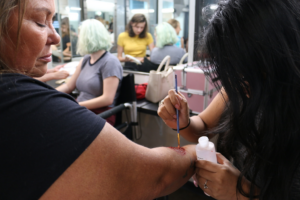
Get to Know: What Do SFX Makeup Artists Use for Fake Blood?
Choosing the Right Path Based On:
Creative goals: Are you fulfilled by enhancing natural beauty, or do you want to create advanced looks required in film, TV and stage productions?
Income style: Do you prefer building a steady income as a licensed cosmetologist, or are you excited by project-based income as an SFX makeup artist?
Work environment: Would you enjoy forming long-term client relationships, or does collaborating with behind-the-scenes artists and production teams excite you more?
Interest in storytelling: Do you want to help someone look their best for real-life moments, or transform actors into otherworldly characters that drive a narrative?
Bonus Tip: Want to Truly Excel in SFX Makeup?
Cinema Makeup School, part of the Cinema Art College Corporation, is where serious artists come to push boundaries. In our special effects makeup course, students don’t just learn from books – they train with the best working MUAs in the industry. You’ll have the chance to showcase your work publicly, collaborate with artists from around the world and build a standout portfolio.
And if finances are holding you back? Don’t stress. We offer flexible financing options so money doesn’t stand in the way of your makeup dreams.
Enroll now and turn your dream of becoming an SFX makeup artist into reality!
Can You Learn Both?
Yes! Some artists choose to start with cosmetology makeup for a stable income base and later enroll in an SFX makeup school to expand their creative skills.
This combo opens doors to a wide range of freelance work – from bridal makeup on weekends to movie shoots during festival seasons.
Want a behind-the-scenes look at what you could be learning? Watch our student projects on YouTube!
Frequently Asked Questions:
Q 1. Which career path has better income potential: cosmetology or SFX makeup?
Both paths can be lucrative, but the income style is different. Cosmetologists often earn steady, client-based income through regular appointments, tips and retail commissions. SFX makeup artists usually work project-by-project, with the potential for higher pay per job, especially on film or commercial sets.
Q 2. Can I join a special effects makeup course without giving up my beauty clients?
Definitely. Many working beauty artists expand into SFX makeup to diversify their services. You can continue your bridal or salon work while learning SFX part-time or through:
Q 3. Do I need a portfolio for cosmetology or SFX makeup jobs?
A portfolio is valuable in both fields, but it’s primarily essential in special effects makeup. In cosmetology, employers often prioritize your license and client-handling skills. But in SFX makeup, your portfolio speaks for your talent, showcasing your ability to create prosthetics, wounds, creatures and transformations.
In special effects makeup, the key to creating lifelike prosthetics is starting with accuracy. When it comes to designing custom prosthetic pieces for the face, such as character transformations, wounds, or creature features, the process begins with a face cast.
From horror films to sci-fi series, character transformations often depend on perfectly fitting facial appliances. Without them, even the most talented MUA risks poor fits, warped designs, or awkward applications.
In this blog, we’ll walk you through why facial casting is important in SFX makeup and how to make one like a pro.
Let’s dive in.

What Is a Face Cast in SFX Makeup?
A face cast is a three-dimensional mold taken of a person’s face using materials like alginate and plaster bandages. The mold records even the finest features, such as skin texture, wrinkles and bone contours, resulting in an accurate replica of the actor’s face.
SFX makeup artists use this life-sized model to sculpt prosthetic pieces that fit precisely. That accuracy is crucial when building effects like:
- Prosthetic wounds and scars
- Creature masks or full-face appliances
- Aging transformations
- Hybrid or sci-fi characters
- Anatomical simulations
Unlike a one-size-fits-all approach, face model casting allows you to work with the unique geometry of a specific face, leading to more believable and comfortable results on set.
Why Is Face Casting Essential for Prosthetic Makeup?
Precision matters in prosthetic makeup. When a piece doesn’t align perfectly with the face, it can appear stiff, shift during movement, or even peel off mid-scene.
Here’s why a facial cast is so critical:
1. Custom Fit for Sculpting
Once you have a plaster copy of the actor’s face, you can sculpt directly onto it. That means the prosthetic will match facial contours perfectly – no guesswork.
2. Reduces On-Set Application Time
Custom-fit prosthetics are quicker to apply and require less adjustment. This is crucial on film sets, where every minute counts.
3. Comfort for the Performer
Poorly fitted prosthetics can be uncomfortable or even painful. A proper face cast helps avoid pressure points and skin irritation.
4. More Realistic Movement
A prosthetic built on a personalized face cast will move more naturally with the actor’s expressions, resulting in more immersive performances.
What You’ll Need: Tools and Materials
Creating a face cast isn’t expensive, but it does require specific materials to ensure safety and quality. Here’s a list of essentials used by industry professionals and students at top SFX schools.
Materials:
- Alginate – A fast-setting, skin-safe molding compound
- Plaster bandages – Used to form the sturdy outer layer, also known as the mother mold
- Bald cap or cling wrap – To cover hair
- Petroleum jelly or release cream – For eyebrows, lashes and beard hair
- Mixing bowl and spatula – For alginate prep
- Measuring cups & water spray bottle
- Straws (optional) – For nostril breathing
- Gloves, towels, cape and drop cloth – To keep things clean
- Hydrocal plaster or Ultracal – Used to create the final positive cast
- Silicone casting materials – For reusable molds
- Clay – To smooth surfaces before sculpting
Having everything ready before starting is crucial. Alginate sets fast and there’s no time to fumble once it’s on the face.
Step-by-Step: How to Create a Perfect Face Cast
Face casting is a detailed process that requires teamwork, patience and precision. It’s always a two-person job – one person to act as the model and another to apply the materials. Never attempt this alone, especially with someone inexperienced.
Step 1: Prepare the Subject
To begin, have your subject seated comfortably in a reclining chair. Their hair should be tied back and fully covered with a bald cap or plastic wrap to avoid interference with the molding materials. A thin layer of petroleum jelly or release agent should be applied to the eyebrows, eyelashes and any facial hair to prevent the alginate from sticking.
Drape a cape or towel over their shoulders to keep their clothing protected and to catch any drips. Most importantly, explain the entire process beforehand, especially the part about breathing through the nose. Ask the model to keep their eyes closed and face relaxed so the cast doesn’t pick up any unwanted lines, wrinkles, or muscle tension.

Step 2: Mix and Apply Alginate
Next, prepare the alginate by mixing it with cold water, following the instructions on the packaging. It sets quickly, so efficiency is key. Starting at the top of the forehead, begin applying the alginate downward across the face, using your hands or a spatula to smooth it over the contours of the cheeks, chin and around the mouth.
Always leave the nostrils open to ensure your subject can breathe easily. A consistent layer, about a quarter inch thick, ensures durability and captures skin detail effectively. Alginate is excellent at reproducing fine features, such as pores, wrinkles and bone structure, making it ideal for prosthetic makeup.
Step 3: Build the Support Shell (Mother Mold)
While the alginate is still flexible, a rigid outer shell, often called the mother mold, needs to be applied to hold its shape. This is done using plaster bandages that are dipped in water and layered across the face.
Overlapping the strips adds strength and at least two layers are recommended. It’s important to cover the entire alginate surface while keeping pressure minimal to avoid deforming the shape. The plaster sets in about 10 to 15 minutes, creating a sturdy casing that locks the negative mold in place.
Step 4: Demolding
After the shell has set, gently lift the edges of the plaster bandages to begin removal. Instruct the model to carefully move their face to loosen and detach the cast. The mold should then be lifted off the face slowly and in one clean motion.
Place the complete mold in a clean, secure area and inspect it for any thin areas, air bubbles, or missing details. These flaws can interfere with the accuracy of the final prosthetic piece.
Step 5: Create the 3D Face Copy for Sculpting
Once you’ve removed the mold from the model’s face, you’ll be left with a hollow shape that holds all the details of their features. This is what you’ll use to create a solid copy of the face. First, place the flexible alginate mold back into the hard plaster shell so it keeps its shape. Then, pour a thick plaster mixture, like Ultracal or Hydrocal, into the mold. Gently tilt and rotate it to make sure the material spreads evenly and fills every detail.
After it fully sets, usually within 30 to 60 minutes, peel off the outer layers. What you now have is a solid, life-sized copy of the person’s face. This 3D model will be your base for sculpting custom-fit prosthetics.
Watch this hands-on tutorial to see how professional prosthetics are made:
Common Face Casting Mistakes (and How to Avoid Them)
Even experienced artists can mess up a cast. Here’s what to watch out for:
| Mistake | Why It’s Bad | How to Fix It |
| Using expired alginate | Poor texture capture | Always check dates before use |
| Not applying release agents | Hair pulling or skin damage | Never skip jelly on lashes/brows |
| Leaving nostrils covered | Dangerous breathing risk | Always leave nose holes clear |
| Waiting too long to add plaster | Alginate shrinks or deforms | Apply plaster bandages immediately |
| Inconsistent alginate layer | Misshapen prosthetics | Apply quickly and evenly |
Take your time, the goal isn’t speed, it’s accuracy.
Related Blogs You Might Like:
- How to Apply Latex & Vinyl Bald Caps in Character Makeup
- SFX Burn Makeup Techniques Every Artist Should Know
- What Are Prosthetic Masks in Special Effects Makeup?
Face Cast vs. Life Cast: What’s the Difference?
Both terms come up often in SFX circles and they serve similar but distinct purposes.
A face cast focuses solely on the face and is typically used for creating facial prosthetics. This method is quicker to perform and requires fewer materials, making it ideal for projects that only involve the front of the head or facial features.
In contrast, a life cast involves molding the full head or other body parts. It is often used for more complex creations like creature suits, body armor, or other full-body effects. Because of its broader scope, it takes more time and demands more materials than a face cast.

Learn Face Casting Like a Pro at Cinema Makeup School
If you’re serious about mastering special effects makeup, Cinema Makeup School is where your journey begins. As part of the renowned Cinema Art College Corporation, we don’t just teach face casting; we train future professionals to excel in it.
Our Special Effects Makeup Course includes:
- Professional training in face casting and life casting
- Full workflow from casting to sculpting to final application
- Real-world, camera-ready projects
- Access to industry tools, instructors and materials
- Portfolio-building assignments that mimic real-world conditions
By the end of the course, our students don’t just understand prosthetic design, they can do it on deadline, on budget and on-camera.
Apply here or book a tour of Cinema Makeup School!
Making a face cast may look intimidating, but once you understand the process, it becomes one of the most satisfying parts of SFX makeup artistry. It’s technical, tactile and totally transformative. Whether you’re sculpting a demon or designing a realistic wound, a great prosthetic begins with the perfect cast of face.
The beauty and film industries are evolving at lightning speed and behind every iconic character transformation is a skilled special effects (SFX) makeup artist. As the demand for highly trained professionals grows, so does the interest in educational routes that prepare aspiring artists for careers in this exhilarating field.
Whether you dream of crafting monsters for the silver screen or elevating runway looks with avant-garde designs, your journey begins with the right training.
Cinema Makeup School stands out as one of the best special effects makeup course providers, offering both diploma and certificate programs.
Yet many aspiring artists often face a common dilemma: “Which path should I choose – Diploma or Certificate?”
This guide will take you to a comparison of both options, highlighting key differences in curriculum, time commitment and cost to help you make a well-informed decision aligned with your goals.
Differences Between Diploma and Certificate Courses
| Feature | Diploma | Certificate |
| Depth of Learning | Full-spectrum training | Specialized focus |
| Duration | 18–28 weeks | 3–4 weeks |
| Career Preparation | Industry-ready, portfolio-driven | Skill enhancement or entry-level |
| Cost | Higher investment, full curriculum | Lower cost, focused learning |
| Includes Multiple Skills | Yes (beauty + SFX + digital) | No, only focused techniques |
| Certifies a Professional Diploma | Yes | Certificate of Completion |
Now let’s go through the offerings in our makeup artist certification and diploma tracks programs.
Core Tracks in Our Special Effects Makeup Diploma Course:
Our Diploma programs are built to deliver immersive, holistic training. These tracks are designed for individuals aiming to master the art and science of special effects makeup from every angle.
Each track includes a rich blend of disciplines, ranging from foundational beauty makeup and hairstyling to advanced special effects practices. Students explore:
Beauty Makeup, Photographic Hairstyling, Airbrush Makeup, Character Makeup, Prosthetic Makeup, Creature Maquette Sculpting, Digital FX, Special Effects Makeup, ZBrush, Advanced Beauty Theory and Advanced Lab Techniques.
This comprehensive curriculum ensures graduates are confident across both traditional and modern techniques.
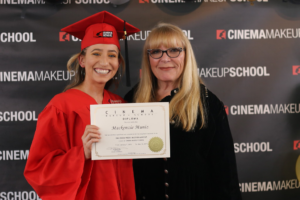
Below are the core diploma tracks:
1. Complete Track Diploma
Duration: 28 Weeks | 1,030 Clock Hours
Tuition + Fees: $31,020
2. FX Track
Duration: 25 Weeks | 910 Clock Hours
Tuition + Fees: $27,640
3. Master Makeup Track
Duration: 18 Weeks | 630 Clock Hours
Tuition + Fees: $17,340
4. High Fashion Track
Duration: 6 Weeks | 210 Clock Hours
Tuition + Fees: $6,420
5. Creature Concept Design Track
Duration: 3 Weeks | 120 Clock Hours
Tuition + Fees: $3,085
Our SFX Makeup Artist Certification Program Includes:
Certificate programs are perfect for learners who want a deep dive into specific aspects of special effects makeup without the extended timeline of a diploma.
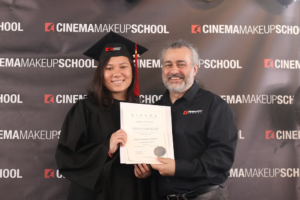
1. Character Makeup
Duration: 4 Weeks | 140 Clock Hours
Tuition + Fees: $5,090
Learn to sculpt and paint prosthetics while building a range of character looks. Training covers bald cap use, aging techniques, facial hair and injury effects for believable on-screen transformations.
2. Prosthetic Makeup
Duration: 4 Weeks | 140 Clock Hours
Tuition + Fees: $5,510
Sculpt facial appliances, create molds and work with silicone, gelatin and transfer methods. Finish with hands-on training in applying and painting realistic prosthetic pieces.
3. Special Effects Makeup
Duration: 4 Weeks | 140 Clock Hours
Tuition + Fees: $5,410
Learn to sculpt creatures, correct lifecasts and create foam latex appliances. Students also fabricate custom teeth, cast molds and apply painted prosthetics for lifelike FX results.
4. Advanced Lab Techniques
Duration: 4 Weeks | 120 Clock Hours
Tuition + Fees: $7,300
Refine advanced skills in mold-making, silicone casting and painting. Learn hair punching, patching and crafting realistic eyes for high-detail SFX work.
5. Advanced Beauty Theory
Duration: 3 Weeks | 120 Clock Hours
Tuition + Fees: $3,310
Master styles in drag, fashion and editorial makeup. Enhance airbrush control for tattoo and stencil effects, while refining prosthetic and corrective techniques for high-impact looks.
While certificate courses are shorter, the training is intense, hands-on and industry-aligned.
Don’t Miss: How Cinema Makeup School’s Bootcamps and Workshops Empower You to Master SFX Makeup?
Time, Budget and Flexibility: Practical Factors
Diploma programs demand more time and financial investment, but the payoff is a broad, versatile education. These programs typically span 3 to 7 months and include extensive practice hours.
Certificate programs, with their 3 – 4 week formats, offer flexibility and lower upfront costs. This makes them an excellent entry point or an add-on for working professionals.
| Program Type | Duration | Avg Cost (Total) | Best For |
| Diploma | 3 to 7 months | $17,000–$31,000 | Career changers, full-time students |
| Certificate | 3 to 4 weeks | $3,000–$7,000 | Upskilling, niche specialization |
Which Path Should You Choose?
Ultimately, the best choice depends on your professional goals and how deeply you wish to immerse yourself in special effects makeup.
Choose a Diploma Program if you:
- Want a complete education with broad applications
- Are starting fresh or changing careers
- Have time and resources to invest
- Want to create a diverse, high-end portfolio
Choose a Certificate Program if you:
- Want to sharpen specific skills quickly
- Are already working and need a flexible option
- Prefer a lower upfront investment
Also read, 8 Killer SFX Makeup Looks You Should Try To Become a Pro MUA
Why Cinema Makeup School Is the Ideal Place For Special Effects Makeup Course?
Backed by the legacy of Cinema Art College Corporation, Cinema Makeup School is where foundational training transforms into high-level artistry through immersive, professional instruction.

While different makeup schools offer varying diploma and certificate curricula to meet distinct educational goals, we provide both depth and flexibility. Our programs are not only structured to train, but also to launch your career in the makeup industry.
With a 92% graduation rate and over 10,000 alumni worldwide, we’ve established a proven path to success for makeup professionals.
Whether it’s mastering the fine details of prosthetic sculpting or bringing digital creatures to life, our hands-on approach and expert instructors set our graduates apart.
Enroll now if you want to gain real-world experience with camera-ready looks and access to one of the strongest networks in the industry.
Check out: How Cinema Makeup School’s SFX Makeup Course Brings Seasonal Characters to Life?
Both diploma and certificate courses offer valuable experiences; the right choice depends on your goals. A diploma gives you a launchpad into the industry. A certificate gives you sharp skills with less time and cost.
Few things scream horror, trauma, or Halloween drama quite like a gruesome set of fake stitches. For creating stitched lips, a Frankenstein-inspired scar, or cosplay staples that look disturbingly real, the art of fake stitches with makeup is one of the most effective SFX tricks in your arsenal.
In this blog, we’ll walk you through how to make fake stitches with makeup step by step. We’ll explore various methods, materials and pro techniques used by top special effects makeup artists.
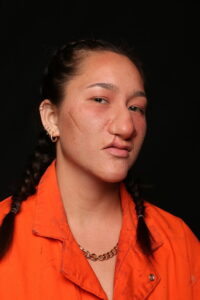
Why Fake Stitch Makeup Is a Must-Have Skill?
Fake stitches makeup isn’t just a Halloween trend; it’s a staple in horror films, crime dramas, cosplay conventions and even music videos. The versatility of stitches, clean surgical lines, crude thread pulls, or rusty wire staples lets you tell an entire story on the skin.
Popular types include:
- Stitched Lips Makeup
Turn silence into a statement. This eerie effect creates the illusion of sewn-shut lips, perfect for haunted characters, cursed beings, or freak show aesthetics. It’s shocking, dramatic and instantly memorable. - Stitched Face Makeup
From forehead scars to jawline closures, stitched face makeup helps craft Frankenstein monsters, undead creatures, or post-surgery sci-fi hybrids. It’s ideal for both horror and body modification looks. - Fake Staples for Cosplay
Metallic, gritty and painful-looking, fake staples simulate high-tech injuries or military repairs. Think androids, war survivors, or cyberpunk rebels patched together after battle. - Stitches Halloween Makeup
Want a versatile horror look? Combine stitches with clown designs, doll faces, or melting skin effects. This style gives you endless freedom to be creative, creepy, or even cute-grotesque.
Materials You’ll Need to Create Fake Stitches
Before we dive into the step-by-step, gather your tools. Here’s what the pros typically use for creating realistic stitched skin:
Essential SFX Kit:
| Product | Purpose |
| Liquid latex or scar wax | To build and shape the raised wound areas |
| Foundation and face paint | To blend fake skin into your real skin tone |
| Fake blood | Adds a fresh or clotted wound effect |
| Cotton or tissue | For texture and depth |
| Spirit gum or pros-aide | For adhering thread or staples |
| Thread, yarn, or dental floss | For creating the actual stitches or staples |
| Alcohol-activated palette | To color bruises, shadows and healing tones |
| Tweezers or a sculpting tool | To create stitch holes |
Caution: Always test materials on a small skin patch to avoid allergic reactions.
Step-by-Step: How to Make Fake Stitches With Makeup
Creating realistic stitched effects isn’t just about gluing thread to skin; it’s about storytelling through texture, shape and color. Here’s a complete guide to excel in this powerful SFX technique:
Step 1: Prep the Skin
Start with clean, dry skin. Oils, dirt, or leftover makeup can weaken your materials and cause peeling or discomfort.
- For face or lip applications, gently exfoliate using a soft scrub.
- Apply a light moisturizer or barrier spray to protect sensitive skin, especially around the lips or eyes.
- Optional: Apply a thin layer of castor seal over your skin if using wax. It helps products stick better and gives you an even surface to work on.
Pro Tip: Mark your stitch zone lightly with tape or eye pencil to avoid placement mistakes.
Step 2: Sketch the Wound Shape and Stitch Pattern
Use a white eyeliner pencil to map out the shape and placement of the wound and stitches.
- Draw a central cut or gash where the “wound” will be.
- Lightly mark where each stitch entry and exit point will go, spacing them about 0.5–1 cm apart, depending on the desired style.
- Keep your lines asymmetrical for horror or trauma themes and straight & clean for surgical or sci-fi looks.
Think of this as the blueprint; spacing and direction matter, especially in stitched lips or surgical themes.
Step 3: Build Up Skin Texture With Latex or Wax
Use liquid latex, scar wax, or gelatin to create realistic raised skin around the wound. Each gives a slightly different finish:
- Latex: Ideal for flexible areas (face, hands). Apply in thin layers with a sponge and dry between coats.
- Scar wax: Best for controlling shape & sculpting deep ridges. Use a spatula or fingers.
- Gelatin: Perfect for organic, uneven wound textures. Heat slightly and shape with a brush or stick.
Technique:
- Apply your base product along the wound outline.
- Use a spatula or wet fingers to feather edges into the skin.
- Press small pieces of cotton or tissue into the latex to add volume or simulate ripped flesh.
- Sculpt raised edges or ridges with your tool; these simulate trauma and tension in the skin.
Step 4: Paint for Realism
Once your texture is dry, it’s time to color the wound and surrounding skin for realism and depth.
Start by applying your foundation or base paint over the prosthetic to blend with your natural skin tone.
Then, layer in the drama:
| Color Palette | Usage |
| Deep red + burgundy | Fresh blood, inner wound tissue |
| Blue + purple | Bruising, oxygen loss, trauma |
| Green + yellow | Aged or infected wounds |
| Brown + black | Scabbing, dirt, or dried blood |
Use stippling techniques for a natural mottled look. Alcohol-activated paints offer translucent layering and water resistance, ideal for detailed bruising and blending.
Recommendation: Use small brushes for detail and sponges for mottling or fading edges. Add depth using shadows around the wound edges.
Step 5: Add the Stitches or Staples
Now, turn that painted gash into a stitched masterpiece.
For Traditional Thread Stitches:
- Cut black thread, dental floss, or yarn into short lengths (1–2 inches).
- Carefully position the threads across the wound using tweezers for precision.
- Glue each end into the wound edge using spirit gum or Pros-Aide.
- Push them slightly into the latex to mimic skin being pulled tight by the thread.
For Cross-Stitches or Decorative Looks:
- Crisscross threads over the gash for a stylized, stitched-up aesthetic.
- You can create Xs, zig-zags, or even patterned stitches depending on your character.
For Fake Staples:
- Trim small segments of wire or toothpicks, each about 1 to 1.5 cm long.
- Paint them metallic gray or silver.
- Glue into place parallel across the wound using spirit gum.
Useful Tip: Vary thread tension and angle slightly for a distressed, painful look. Use a thinner thread for surgical realism and a thicker thread for horror or fantasy.
Step 6: Add Blood, Bruising & Final Details
Drip or dab fresh fake blood into and around the wound to create a lifelike appearance. For oozing effects, allow the blood to run naturally from the stitches, giving a freshly torn look.
To simulate clotted or dried blood, apply a thicker blood paste or a DIY mix of corn syrup and cocoa powder. Enhance the trauma by stippled bruising, blend deep red and purple shades outward from the wound using a sponge for a realistic gradient.
For added depth, apply rigid collodion beside the stitches to create puckered, indented scar tissue that mimics the skin being pulled tight by tension.
Balance is key: enough blood to look fresh or nasty, but not so much that it hides your stitching work.
Related Article: What Do SFX Makeup Artists Use for Fake Blood?
Optional: Seal and Set
- Once your look is complete, use a setting spray to keep everything in place, especially for long shoots or Halloween parties.
- Use fixative sprays over thread or staples to ensure durability.
- For HD photography, lightly powder over shiny areas to reduce glare.
Suggested Readings:
SFX Burn Makeup Techniques Every Artist Should Know
How to Apply Latex & Vinyl Bald Caps in Character Makeup
What Are Prosthetic Masks in Special Effects Makeup?
Common Mistakes to Avoid While Applying Stitch Makeup
Applying fake stitch makeup takes precision. From blood placement and blending to stitch spacing and adhesive choice, even small missteps can ruin the realism. Here’s a quick breakdown of the most common mistakes to avoid for a clean, believable result:
- A) Overusing blood: Too much fake blood can hide your stitch details.
- B) Poor blending: Make sure latex edges fade naturally into the skin.
- C) Unrealistic spacing: Stitches too close or far apart can ruin believability.
- D) Using the wrong adhesive: Spirit gum is best for prosthetics and threads; don’t rely on regular glue.
Watch our students bring cinematic makeup to life.
Want to Take Your Special Effects Makeup Skills from Good to Gory Great?
If you’ve made it this far, chances are you don’t just want to copy a Halloween tutorial; you want to master the real craft. That’s where Cinema Makeup School comes in.
As a part of Cinema Art College Corporation, we don’t just teach stitches, we teach transformation.
From stitched lips to full creature builds, our industry-led courses cover SFX makeup, prosthetics, character creation, beauty and beyond. You’ll learn in a real studio environment, using Pro Tools and working alongside artists who’ve designed monsters for the big screen.
If you’re serious about bringing your makeup dreams to life, apply now or book a tour of Cinema Makeup School.
Practice, experiment and don’t be afraid to get a little messy, because the best SFX looks are the ones that make people do a double-take.
Special effects makeup is where imagination meets realism. From transforming actors into terrifying creatures to creating lifelike wounds, burns, or aliens, SFX makeup is a vital force in entertainment and beyond. But what happens after you master the craft? What career paths open up for a skilled special effects makeup artist?
In this blog, we’ll dive deep into the best special effects makeup artist jobs, covering industry roles, job types, educational paths and how to position yourself in this competitive but thrilling field.
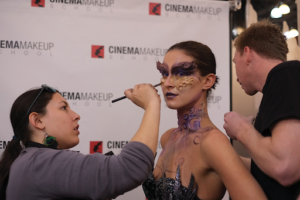
Why Is Special Effects Makeup More Than Just Makeup?
Before we dive into careers, it’s important to understand that special effects makeup artistry goes far beyond basic beauty applications.
It includes prosthetics, creature design, animatronics, gore effects, fantasy makeup and more. SFX makeup artists often use skills like sculpture, painting, mold-making, digital design and even medical science.
This field is for those who don’t just want to beautify a face, they want to transform reality.
Where Do Special Effects Makeup Artists Work?
You’ll find special FX makeup artists behind the scenes of:
- Hollywood Films and Independent Cinema
- Television Shows (especially horror, sci-fi and fantasy genres)
- Theatre Productions
- Haunted Attractions & Theme Parks
- Commercials
- Fashion Shows & Editorials
- Music Videos
- Cosplay & Live Events
- Medical Training Simulations
Top Special Effects Makeup Artist Jobs
Looking to turn your creativity into a full-time career? There are a variety of job roles in the field of special effects makeup across film, TV, live events, theme parks, medical fields and even cosplay culture. Here are the top job opportunities every aspiring SFX makeup artist should know about:
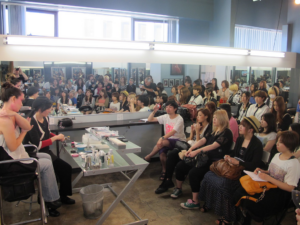
1. Film and TV
Professionals work on movie and television sets to create everything from realistic injuries to full creature transformations. The role involves long hours, tight deadlines and collaboration with directors, costume designers and special effects teams.
Job Highlights:
- On-set makeup for actors and stunt doubles
- Prosthetic application and blending
- Blood, wounds, burns and aging effects
- Continuity maintenance during multi-day shoots
Most SFX makeup artists in film start as assistants or interns before getting lead roles.
2. Prosthetic Designer and Fabricator
This behind-the-scenes job focuses on designing and building prosthetics used by actors or models. These professionals typically work in special effects studios or run freelance fabrication workshops.
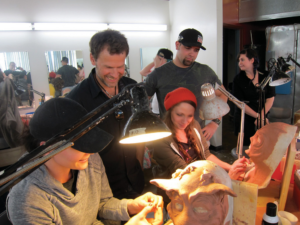
Job Responsibilities:
- Sculpting prosthetics in clay or digitally
- Mold-making and casting techniques
- Crafting detailed prosthetics tailored to the needs of specific characters or production requirements
- Collaborating with makeup departments and effects supervisors to ensure proper fit and realism
This is a vital role in productions that require fantasy characters, aliens, monsters, or injury simulation.
3. Character and Creature Designer
This role combines concept art, anatomy knowledge and creativity to design unique characters for films, theme parks and video games. It’s a visual development position that may overlap with digital art and sculpting.
Key Aspects of the Job:
- Developing visual concepts for characters
- Sculpting maquettes or digital 3D models
- Coordinating with production designers and SFX teams to ensure character designs translate seamlessly from concept to screen
Great for artists who love storytelling through creature design.
4. Theme Park SFX Makeup Technician
Theme parks like Universal Studios, Disneyland and Halloween horror attractions hire SFX artists for seasonal and full-time roles. This job involves applying reusable character makeup and prosthetics to dozens of performers each day.
Common Tasks:
- Quick-turnaround prosthetic application
- Touch-ups and makeup maintenance
- Reusing and sanitizing foam/silicone prosthetics
- Occasionally assisting with props or set decor
5. Medical Simulation and Forensic Makeup Specialist
These MUAs apply their special effects makeup techniques to create lifelike injuries and medical conditions for training simulations used by healthcare, emergency and military teams. They help create lifelike injuries and conditions for high-stakes training.
Typical Job Duties:
- Simulating trauma (wounds, burns, amputations)
- Applying effects on mannequins or live actors
- Designing reusable prosthetics for training dummies
- Working with hospitals, EMS, or academic institutions
This growing field blends makeup artistry with education and healthcare impact.
6. Cosplay and Convention SFX Specialist
As cosplay becomes more professionalized, many SFX makeup artists are hired to help build character looks for conventions, social media and brand collaborations. Some also take commissions or teach cosplay-specific makeup techniques.
Job Opportunities:
- Commission-based prosthetic application and costume support
- Brand sponsorships or event appearances
- Content creation for YouTube, Instagram, or TikTok
- Teaching workshops at pop-culture expos or online
Many successful cosplay artists also launch their own product lines or training courses.
7. Freelance Special Effects Makeup Artist
Freelance artists work across a wide range of projects, including indie films, commercials, music videos, photoshoots, live performances and corporate events. This path offers flexibility but requires hustle, networking and a strong portfolio.
What to Expect:
- Wide variety of projects and clients
- Managing your own rates and availability
- Building long-term client relationships
- Opportunity to scale into your studio
8. SFX Makeup Instructor or Workshop Trainer
After years of experience, many professionals move into education. You can teach at special effects makeup schools, offer your own bootcamps, or build an online course platform for learners worldwide.
Key Benefits:
- Stable income and flexible teaching hours
- Opportunities to influence and mentor new artists
- Great for building your brand and reputation
- Potential to launch your own school or YouTube education channel
Ideal for artists who love sharing knowledge and shaping the next generation of talent.
More Helpful Blogs:
Top 5 Tips for Beginner Makeup Artists
Top 6 Trends in the Makeup Industry 2025
How to Become a Freelance Makeup Artist – Complete Guide
Education & Training: Where to Begin?
Now that you’ve explored the top SFX makeup jobs, it’s time to talk about how to get there. Each of these roles requires specialized training, technical skill and hands-on experience. But with so many special effects makeup schools out there, where should you start?
Cinema Makeup School, part of the prestigious Cinema Art College Corporation, stands out from the rest with comprehensive & industry-driven programs.

- Training with industry-standard tools and techniques
- Mentorship from award-winning professionals
- Networking with leading artists and studios
- Hands-on projects and portfolio development
- Strong industry reputation and alumni success stories
Whether you want to work in film, fashion, or cosplay culture, we give you the foundation to launch your SFX career.
Types of Makeup Artistry (and Where SFX Fits In)
While “makeup artist” is a broad term, special effects makeup falls under a unique category of character-driven transformation. Here’s how it differs from other types:
| Type of Makeup Artistry | Focus Area |
|---|---|
| Beauty Makeup | Glamour, weddings, editorial |
| Fashion Makeup | Runways, magazines |
| Theatrical Makeup | Stage visibility, character depth |
| Special Effects Makeup | Prosthetics, wounds, fantasy, monsters |
| Creature Design | Conceptual sculpting and builds |
| Airbrush Makeup | Film, TV, body art |
SFX artists often cross into multiple categories, making their skills incredibly versatile.
What to Expect in SFX Makeup Jobs:
SFX makeup careers start modestly but grow with experience and networking. No matter if you choose freelance freedom or studio stability, success depends on strong relationships, a solid portfolio and the ability to handle travel, long hours and tight deadlines.
- Entry-level pay may be modest, but with skill and persistence, your value (and rates) increase over time.
- Freelance flexibility vs. studio consistency is a personal choice.
- Jobs often arise from networking, social media and strong portfolios.
- Build relationships with directors, costume departments and other artists.
- Be ready to travel – jobs might take you to different cities, sets, or even countries, depending on the project.
- Deadlines can be intense – many shoots involve early call times, long hours and quick turnarounds.
The career options for special effects makeup artists are far more diverse than most imagine. Whether you dream of Hollywood sets, haunted mazes, or educational simulations, the skills you learn can take you there.
So, if you’re ready to turn brushes and prosthetics into a powerful career, now’s the time. With a blend of artistry, discipline and professional training, your path could be both creatively fulfilling and financially rewarding.
Book a tour or apply now to Cinema Makeup School!
Creating realistic burn effects is one of the most jaw-dropping and technically challenging skills in special effects makeup. From smoldering skin to layered tissue trauma, SFX burn makeup brings drama and believability to film, TV, theatre and even haunted attractions. But behind every convincing burn lies careful technique, the right materials and an understanding of anatomy and storytelling.
This blog will guide you through essential burn special effects makeup methods, tools and tips.
What Is SFX Burn Makeup?
SFX burn makeup is a specialized area of special effects makeup focused on recreating burn injuries, from light surface redness to deep, severe tissue damage. These effects are designed for screen, stage, cosplay and Halloween, helping to tell stories of survival, horror, or transformation.
Unlike regular makeup, this style often incorporates prosthetics, tissue buildup, latex, gel effects and complex color layering, all techniques that must be mastered with safety, precision and creativity.
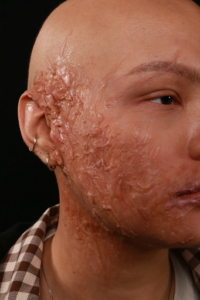
Types of Burn Effects in SFX Makeup
Each degree of burn requires a different approach to makeup application. Here’s a breakdown:
1. First-Degree Burn
- Look: Redness, irritation, slight swelling.
- Technique: Use a red cream base or alcohol-activated paint, blended with slight yellow and pink tones. Apply a light amount of texture for a subtle effect.
2. Second-Degree Burn
- Look: Blistering, deeper redness, wetness.
- Technique: Layer gelatin, collodion, or latex to simulate raised blisters. Use a glossy finish to mimic moisture and carefully stipple color for realism.
3. Third-Degree Burn
- Look: Charred, blackened tissue, cracked skin.
- Technique: Sculpt or apply prosthetics with depth, using cotton and latex or silicone. Charcoal tones, dried blood and textured sponges are key here.
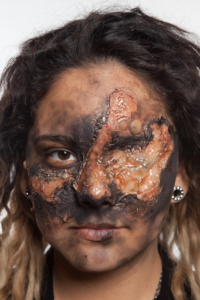
Understanding these levels is crucial for realism and for creating burn makeup that not only looks the part but supports the story being told.
Must-Have Tools & Materials for Burn Makeup
Creating realistic and impactful fake burn makeup requires more than just artistic flair, it demands the right tools, materials and a deep understanding of how to use them safely and effectively.
Key materials include liquid latex and cotton for creating texture, gelatin to form blisters, silicone for long-lasting prosthetics, rigid collodion to mimic scars, alcohol-activated paints for coloring and blood gels and pastes to simulate realistic wounds.
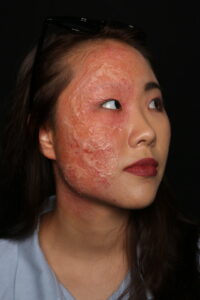
Here’s a breakdown of essential materials every aspiring SFX makeup artist should be familiar with:
1. Liquid Latex & Cotton
A time-tested, budget-friendly duo, liquid latex and cotton work together to create textured skin, peeling flesh and raised areas. By layering and sculpting with a spatula or fingers, you can build dimensional burns that hold color well and withstand movement.
2. Gelatin
Gelatin is a versatile material used to replicate soft blisters and bubbled skin. This material melts for easy skin application and can be sculpted before it hardens. It’s especially useful for second-degree burn effects due to its flexibility and translucency.
3. Silicone
For professional-level results, silicone offers a durable, reusable solution. It mimics the skin’s elasticity, making it ideal for high-end prosthetics. Silicone is commonly used to make reusable burn prosthetics that feature lifelike edges and textures, allowing them to blend naturally with the skin.
4. Rigid Collodion
Rigid collodion is excellent for creating sunken scars and puckered skin, perfect for simulating healed or older burn wounds. It works by contracting as it dries, pulling the skin inward for a natural indentation effect.
5. Alcohol-Activated Paints
These paints are a go-to choice for painting over textured surfaces like latex, gelatin, or silicone. Their waterproof nature and pigment strength make them ideal for layering colors such as deep reds, purples and burnt blacks to create hyper-realistic skin trauma.
6. Blood Gels & Pastes
Finishing with blood effects adds realism and intensity to your burn makeup look. Gels and pastes come in different viscosities and shades, from fresh arterial red to thick, darkened scabbing, to help tell the story of a recent injury or long-healed wound.
Quick Tip: Always test materials on the skin beforehand to prevent allergic reactions and work in a well-ventilated area. Understanding how different materials react to heat, light, and motion is essential to ensuring both safety and a realistic effect.
Step-by-Step: How to Create a Realistic Burn Makeup Look?
Creating realistic burn makeup involves careful layering of textures, color blending and detailed effects to mimic the appearance of skin trauma. This guide covers essential techniques to build convincing burns, whether blistered, charred, or scarred, helping you achieve authentic special effects makeup for any burn severity.
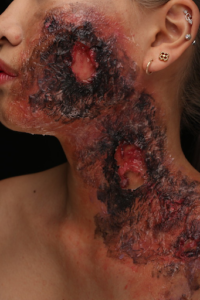
Step 1. Prep the Skin
Before applying any product, the skin must be clean, dry and free of oils. This ensures better adhesion and prevents discomfort for the model or actor.
- Clean the skin using witch hazel or a mild cleanser to prep the area.
- Apply a barrier spray or a thin layer of adhesive (like Pros-Aide) to protect the skin and enhance durability.
- If you’re working on a large area or for extended wear, consider using a bald cap or prosthetic base to minimize skin contact.
Step 2. Build Texture with Latex & Cotton
This is where the fake burn makeup starts to take shape.
- Apply liquid latex to the skin with a sponge or single-use applicator.
- Tear small pieces of cotton or tissue and layer them into the latex while it’s still wet.
- Sculpt the surface with a spatula, shaping wrinkles, ridges and broken skin textures that mimic damaged tissue.
- Let each layer dry before adding another to avoid clumping or sliding.
Pro Insight: Varying the height and shape of the latex build-up creates a more natural, chaotic burn pattern.
Step 3. Add Blisters with Gelatin
Second-degree burns are characterized by painful blisters. Use gelatin to replicate this critical element:
- Melt gelatin (usually in a microwave) until smooth and slightly warm.
- Carefully spoon or drip the gelatin onto the textured surface to form bulbous blisters or raised fluid-filled areas.
- Manipulate the edges with a spatula while it cools to shape them realistically.
You can layer multiple gelatin applications to create different blister depths and sizes.
Step 4. Paint the Trauma Base
Now it’s time to color the burn with depth and dimension using alcohol-activated paints or cream-based pigments.
- Begin with deep reds as the primary undertone – this represents inflammation and vascular damage.
- Blend in dark purples, burgundy and even hints of yellow to simulate bruising and infection.
- For the outer edges, soften the tones to blend into the natural skin, mimicking the way real burns fade.
Use sponges, stipple brushes, or even toothbrushes to create organic, broken patterns in the pigment.
Step 5. Add Detail & Depth
Small touches bring realism to your SFX makeup burns.
- Use a fine brush to paint broken veins, coagulated blood, or burned capillaries.
- Add rigid collodion in select areas to simulate puckered or tightened skin around healed zones.
- Lightly apply black or brown pigment near edges to suggest charring or older burn areas.
- For third-degree enhancements, darker gray or charred tissue textures may be used carefully.
Step 6. Simulate Oozing with Gloss
Nothing sells trauma like a realistic wet finish.
- Apply clear gel, glycerin, or FX gloss products to the burn site to simulate oozing wounds, sweat, or fluid from burst blisters.
- Concentrate gloss around the gelatin blisters or in crevices where fluid would naturally collect.
This creates an uncomfortable, visceral shine that heightens realism on camera.
Step 7. Set & Seal Your Work
Once you’re satisfied with the texture and paint, lock it in.
- Use a professional makeup setting spray to prevent smudging or running.
- For long shoots or performances, apply a layer of sealer or powder to reduce tackiness and increase wear time.
Pro Tip: Reference real burn images from medical sources to better understand wound depth, color transitions and healing stages. Always approach this research ethically and responsibly.
Creating authentic burn special effects makeup takes time and practice, but mastering these techniques can make your work stand out, whether you’re preparing for a film shoot, a haunted house, or a student showcase.
With the right tools, a trained eye and a commitment to detail, even beginners can start crafting show-stopping SFX burn looks that leave a lasting impact.
SFX Makeup Reads You Can’t Miss:
Foam Latex vs Silicone: Choosing the Right Material for SFX Prosthetics
What Do SFX Makeup Artists Use for Fake Blood?
How to Create Creature Design Using Latex, Silicone & Prosthetics?
Learn Special Effects Makeup at Cinema Makeup School
If you’re passionate about bringing lifelike injuries, creatures and cinematic illusions to life, there’s no better place to build your foundation than Cinema Makeup School. As part of Cinema Art College Corporation, a broader institution dedicated to creative education, we’re committed to nurturing the next generation of makeup artists.
Here, students go beyond theory, they train hands-on with industry-standard products, professional equipment and expert instructors who actively work in film, TV and live entertainment.
From SFX burn makeup and trauma simulation to full character transformation, our programs are designed to teach the craft at every level.
Take a look at our students’ incredible work!
Burn effects challenge every SFX makeup artist to think critically, sculpt creatively and paint with precision. With the right techniques and materials, you can transform any character with layers of texture, trauma and visual impact.
Keep pushing boundaries, study real-life references and refine your process; every burn you create adds to your storytelling power.
Book a tour or apply now to Cinema Makeup School to learn these techniques from expert artists!
Creating a convincing bald look is a foundational skill in special effects makeup. Whether you’re transforming an actor for a dramatic role or crafting a Halloween creature, mastering bald cap application, especially using latex & vinyl, can take your character makeup to the next level.
This comprehensive guide explores how to apply a bald cap, the differences between latex and vinyl bald caps and tips to achieve realistic results.
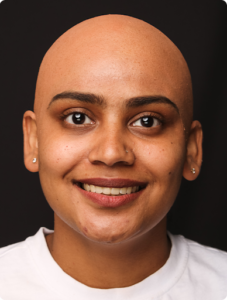
Why Use Bald Caps in Character Makeup?
Bald caps are essential tools for makeup artists, allowing for quick transformation without shaving or major alterations. They’re commonly used in film, theater, cosplay and Halloween events to portray bald characters or to lay the foundation for prosthetic enhancements.
From horror villains to sci-fi creatures, bald cap makeup helps you create seamless, believable character looks. And with various materials available, such as latex and vinyl, you can tailor your application to fit performance needs, comfort and realism.
Vinyl vs Latex Bald Caps: What’s the Difference?
Before you learn how to apply a bald cap, it’s important to choose the right material:
- Latex Bald Cap: Made of thin, flexible latex, these caps are excellent for blending into the skin. They’re often used for more detailed or custom applications where edge work is crucial.
- Vinyl Bald Cap: Slightly thicker and smoother, vinyl caps offer durability and cleaner edges. They’re great for long wear and are easier to manipulate using acetone for a skin-like blend.
Check Out: How Cinema Makeup School’s SFX Makeup Course Brings Seasonal Characters to Life?
How to Properly Apply Vinyl & Latex Bald Caps for Character Makeup?
Applying a latex or vinyl bald cap involves precise steps for a natural, skin-like finish. This tutorial walks through prepping the scalp, trimming the cap, adhering and blending edges and painting for realistic character makeup – ideal for film, theatre, cosplay, or Halloween.
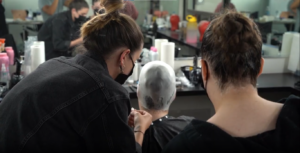
1. Prep the Hair and Skin
Start with clean, dry skin. Hair should be tightly pinned or braided flat to the scalp. Use a light coat of hair gel or pomade to keep flyaways down. Wipe down the face and hairline with alcohol or toner to remove oils and help the adhesive stick securely.
Pro Tip: Use a bald cap liner or wig cap under the bald cap for extra hold and hair protection.
2. Position and Trim the Cap
Place the bald cap over the head, aligning it with the natural hairline. Trim around the ears, nape and forehead with sharp scissors. Leave a bit of extra material along the edge to allow for blending.
Make sure the cap lies flat with no wrinkles. For vinyl caps, slightly heat the material with a blow dryer to make it more flexible if needed.
Beauty Buzz: How to get wrinkles out of a bald cap?
To remove wrinkles from a bald cap, gently warm it with a low-heat hair dryer, then stretch and smooth it using your fingers or a stipple sponge. Applying a thin layer of adhesive before positioning helps the cap lay flat. If folds remain, carefully adjust edges while the adhesive is tacky. Handle with care to avoid damage.
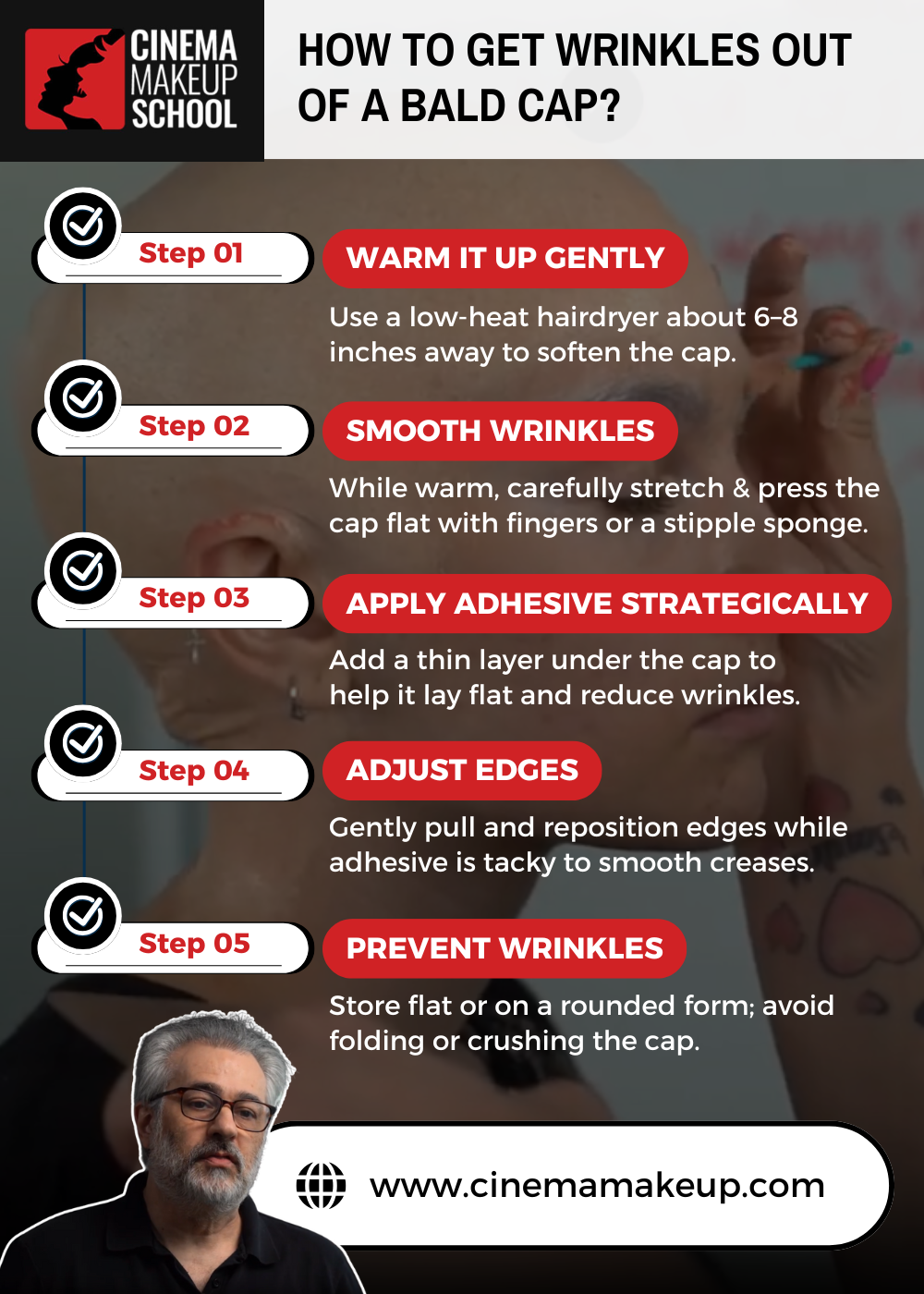
3. Adhere the Cap to the Skin
Apply a prosthetic adhesive (such as Pros-Aide or medical-grade adhesive) around the perimeter of the face. Press the edges of the cap into the glue, working in sections – starting at the forehead and moving to the sides and back.
Note: Vinyl bald caps stick best when the skin is free of oil, while latex caps may benefit from a light powdering before blending.
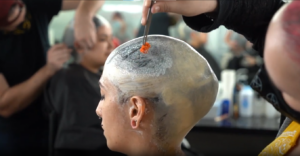
4. Blend the Edges
This is where the real magic happens in the bald cap application. Blending makes the cap look like real skin.
- For a latex bald cap, use liquid latex and a stipple sponge to feather the edge into the skin.
- For a vinyl bald cap, use acetone with a brush or sponge to carefully dissolve and melt the edges into the skin.
Take your time during this step. A smooth transition creates a more realistic appearance for your bald cap.
Note: If you want to learn how to use SFX makeup products to apply bald caps, apply to Cinema Makeup School or book a tour.
5. Match Skin Tone and Paint
Learners often ask:
Can you paint a bald cap?
Absolutely – it’s a key step to achieving a lifelike look.
Use alcohol-activated palettes or rubber mask grease paints to match the cap to the actor’s skin tone. Lightly stipple on the paint using a sponge or brush, adding natural texture and color variation. If the character requires custom coloring, like blue for aliens or green for monsters, this is where you let your creativity shine.
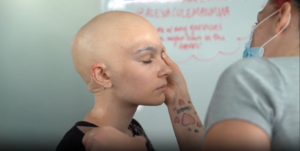
6. Final Touches and Set
Set the makeup with translucent powder or a setting spray to reduce shine and help it last longer under hot lights or performance conditions. Add any additional elements like veins, bruising, scars, or grime to complete the look.
If you’re creating bald cap characters for a fantasy role or spooky Halloween costume, now’s the time to apply prosthetics, masks, or effects makeup over the cap.
Want to see it in action? Check out the character makeup tutorial here:
Learn Professional Bald Cap Application at Cinema Makeup School
In character makeup, transforming an actor into a completely different persona often begins with altering the appearance of the head. That’s where bald cap application plays a key role – it’s essential for creating convincing bald characters, aging effects, creatures and fantasy looks seen in film, television and stage productions.
As a division of Cinema Art College Corporation, Cinema Makeup School is dedicated to equipping you for this path. Our Special Effects Makeup Course offers hands-on training with both vinyl and latex bald caps, giving you the skills needed for real-world character work.
And bald caps are just the beginning. We’ll teach you how to turn makeup into movie magic. Enroll now and start creating your magic!
More Related Articles:
Essential Special Effects Techniques for Aging Makeup
How to Avoid Common SFX Makeup Mistakes?
What is the Difference Between Movie and Stage Makeup?
FAQs
Q: Are bald caps reusable?
A: No. Both latex and vinyl bald caps are generally single-use. Reuse can compromise the fit and finish, especially after stretching, blending, or painting.
Q: Can bald caps cover beards?
A: Yes, but it takes more skill. Using a bald cap for beard coverage involves flattening facial hair and using a combination of adhesives and prosthetic blending techniques to hide texture. Often, an additional prosthetic or stippled latex layer may be applied over the beard area for a smoother finish.
Q: Does the bald cap method protect your edges?
A: Yes, a properly applied bald cap protects your edges by creating a barrier between your hair and adhesives or makeup. Using a protective barrier before application and removing the cap gently helps prevent damage to your hairline.
Special effects makeup has the power to transport audiences to new places, bring creatures to life and create stunning transformations that look incredibly real. If you’re passionate about creating these amazing effects, one of the most important decisions you’ll make is choosing the right material for your prosthetics.
Two of the most popular materials in the industry are foam latex and silicone, each with unique qualities that affect how your prosthetics look, feel and perform. Understanding the differences between these materials will give you the confidence to select the perfect material for your next project.
This guide is designed for artists at all skill levels who want to learn more about the strengths and challenges of these materials. You’ll find useful tips on making and applying prosthetics, so keep reading to find out which option suits your creative vision best.
What Are SFX Prosthetics?
Before diving into material comparisons, let’s clarify what SFX prosthetics are.
These are appliances created to alter an actor’s appearance. Prosthetics can simulate wounds, scars, aging, fantastical creatures, or completely transform someone into an alien or monster. They are sculpted, molded and then cast using materials like foam latex or silicone.
The material choice affects not only how the prosthetic looks but also how it moves, feels and lasts on camera or stage.
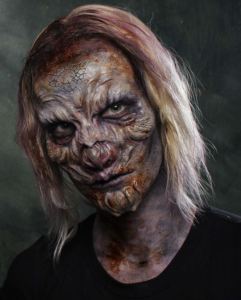
Foam Latex Prosthetics
Foam latex prosthetics have been a staple of special effects makeup for decades. Made by whipping latex into a foam and baking it in a mold, foam latex results in a lightweight, flexible material that is ideal for large prosthetic pieces.
Key Benefits of Foam Latex Prosthetics:
- Lightweight and breathable: Foam latex is porous, allowing air to pass through. This breathability helps actors remain comfortable during long shoots or performances.
- Flexible and stretchy: It moves naturally with facial expressions, making it ideal for creature masks and other large prosthetics.
- Cost-effective: Foam latex is generally less expensive than silicone, making it popular for productions with budget constraints.
- Easy to paint: It accepts paints and adhesives well, allowing for realistic finishes.
Smart Suggestion: Use KY Jelly to add realistic shine to foam latex appliances like tears or sweat for that extra lifelike touch.
Silicone Prosthetics
Silicone prosthetics have become increasingly popular, thanks to their camera-ready realism in today’s high-definition productions.
Advantages of Silicone Prosthetics:
- Unmatched realism: Silicone mimics the look and feel of real skin better than foam latex. It has a natural translucency and soft texture.
- Durability: Silicone is tougher and resists tearing better than foam latex, making it ideal for repeated use.
- Self-adhesive properties: Many silicone prosthetics bond directly to the skin without requiring additional glue.
- Water-resistant: Unlike foam latex, silicone prosthetics can withstand moisture and sweat without degrading.
Helpful Hint: Use 3rd Degree Silicone to achieve high-quality, skin-like prosthetics that hold up well over time.
Foam Latex vs Silicone
Let’s break down the unique strengths of foam latex and silicone in SFX makeup.
| Feature | Foam Latex | Silicone |
|---|---|---|
| Weight | Lightweight | Heavier |
| Flexibility | High | Moderate |
| Breathability | Very breathable | Not breathable |
| Realism | Moderate | High |
| Durability | Moderate | High |
| Cost | Lower | Higher |
| Application | Requires adhesives | Some are self-adhesive |
| Maintenance | Absorbs oils, requires care | More resistant to sweat and oils |
| Ideal Use | Large creature masks, theater | Close-up realistic wounds, facial appliances |
How to Make SFX Prosthetics: A Quick Overview
Making SFX prosthetics involves sculpting, molding, casting and painting to create lifelike pieces, followed by proper application techniques for a seamless finish. Here’s a quick breakdown of the essential steps involved:
- Sculpting: Start by sculpting the desired prosthetic shape using clay.
- Molding: Create a mold from the sculpture, usually in plaster or silicone.
- Casting: Fill your mold with foam latex or silicone and allow it to set fully.
- Demolding: Remove the finished prosthetic carefully.
- Painting: Use special paints designed for foam latex or silicone to bring your piece to life.
- Application: Attach the prosthetic to the actor’s skin using adhesives, blending edges for a seamless look.
Must-Read Articles on SFX Makeup:
How 3D Printed Prosthetics Are Revolutionizing Movie Makeup?
How Cinema Makeup School’s Bootcamps and Workshops Empower You to Master SFX Makeup?
How to Create Realistic Wounds and Scars with Prosthetics?
How to Apply SFX Prosthetics?
Application techniques can differ based on the prosthetic material:
Foam latex prosthetics require strong adhesives like pros-aide or spirit gum. Once applied, edges are carefully blended with liquid latex and makeup.
Silicone prosthetics often use medical-grade adhesives or are self-adhesive. Silicone paints or powders are used to match skin tones and add realism.
Insider Advice:
If you are wondering where to learn special effects makeup to create perfect prosthetics, look no further than Cinema Makeup School.
Here, you’ll learn from industry experts with hands-on experience in film, television and entertainment. As a proud part of the Cinema Art College Corporation, we’re committed to helping you develop real, career-ready skills.
We offer financing options to support your goals and make advanced education more accessible.
Our reputation continues to grow internationally. Learners from Korea’s MBC Academy Beauty School come to us for expert-level SFX training, showcasing our commitment to top-tier education
New to SFX Prosthetic Makeup? Start with These Expert Tips
- Start with foam latex prosthetic makeup if you are new to SFX prosthetics – it’s more forgiving and budget-friendly.
- Focus on sculpting anatomy and texture; a well-sculpted design is the foundation of a realistic prosthetic.
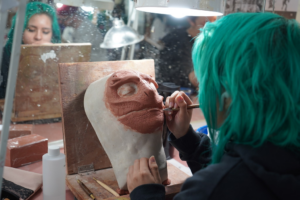
- Learn the casting process for both foam latex and silicone, as each requires different handling and curing techniques.
- Use material-specific paints – foam latex accepts PAX and alcohol-based paints; silicone needs silicone-based pigments.
- Master the art of seam blending to hide edges and make prosthetics look natural on the skin.
- Always prep the skin properly before applying prosthetics using the correct adhesives for each material.
- Clean and store prosthetics safely – foam latex needs dry, cool storage and silicone should be kept flat and dust-free.
- Build your starter kit gradually, investing in essential tools and products as your skills grow.
- Take photos of your work at every stage to track progress and build a portfolio.
- Watch professional tutorials and behind-the-scenes content to learn industry techniques and best practices.
- Be patient, practice regularly, accept mistakes and stay motivated to improve with each new piece.
Foam latex or silicone – each material has its own magic. Know your materials, master your craft and watch your SFX prosthetics come alive like never before!
Apply today or book a tour of Cinema Makeup School to take your passion for special effects makeup to the next level!